
Fire Resistant Glass Market Trends Analysis Research Report By Product Type(Wired, Ceramic, Gel-Filled, Tempered, Other Product Types), By Application(Building and Construction, Marine, Other Applications) & Region (North America, Europe, APAC, MEA, South America) - Global Forecast to 2030
Aug-2024 Formats | PDF | Category: Chemical and Material | Delivery: 24 to 72 Hours
Fire Resistant Glass Market Overview
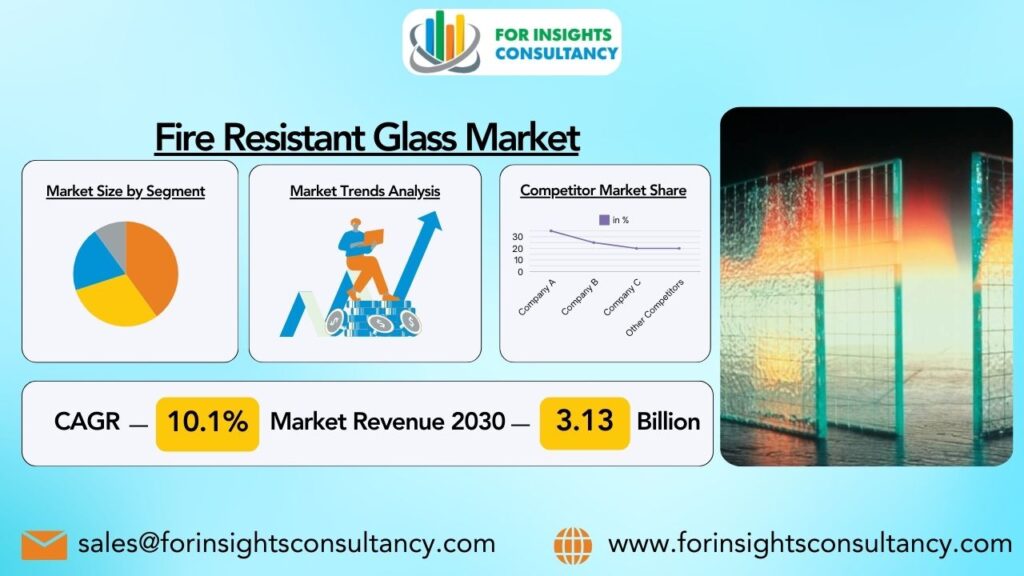
Fire Resistant Glass Market is expected to grow rapidly at 10.1% CAGR consequently, it will grow from its existing size of from $1.43 Billion in 2023 to $3.13 Billion by 2030.
Fire Resistant Glass Market is a category of spcialised glazing specially designed for fire protection, designed to sustain elevated temperatures, confine fire and smoke, and inhibit the conduction of radiant and conductive heat. Fire resistant glass is developed to sustain the structural integrity for specified period to give its occupants ample time to escape and save the structure from damage. The fire resistant glass segment consist of Tempered fire resistant glass, Laminated fire rated glass, Ceramic fire resistant glass, Wired fire glass, Insulating fire resistant glazing systems, Fire rated glass doors/partitions/windows/curtain walls and façade system used on residential, commercial, industrial, Institutional and public infrastructure projects. These products are supplied by glass manufacturers, construction products suppliers, architects, contractors and building system integrator.
Over the last 10 years the Fire Resistant Glass Market has evolved rapidly due to flourishing urban growth, increasing construction of high-rise buildings, tighter fire safety legislation, new developments in glazing technology. Today, building design is often focused on open plan areas with huge expanses of glass without compromising the need for fire safety. As a response, fire resistant glass manufacturers have pioneered high performance fire resistant glazing systems which combine exceptional fire safety with increased transparency, thermal insulation, acoustic efficiency, impact resistance and energy savings. Advances in the technology of multi layered laminated glass, intumescent interlayers, ceramic glazing and insulated fire rated glass stacks has significantly increased fire resistant glass usage within existing building developments.
The increased demand for occupant safety, fire safety and sustainable building design is beginning to influence the existing market environment. Property developers, architects, facility managers and government institutions are now considering the use of fire-rated glazing systems not only for enhanced safety but also to comply with ever-tightening fire regulations. Increased spending on commercial complexes, hospitals, airports, school complexes, hotels, industrial facilities, transportation infrastructure and mixed-use establishmentswill spur growing demand for innovative fire-resistant glass products that offer optimal levels of safety, superior aesthetics and better energy performance.
Technological innovations that reach the market include the development of lightweight fire-rated glazing, multi-functional insulated glass units, intelligent fire-resistant glass, lowemissivity (Low-E) coatings, self-cleaning coatings, UV protection technology and high strength laminated systems to improve the performance of the overall building. Digital manufacturing processes, precision glass manufacturing equipment, advanced coating technology, and robotic-based quality control systems increase the consistency of the product, optical clarity, durability, and ease of installation. The market is also benefitting from integration with intelligent building management systems and energy efficient facade design.
Regulatory and legal developments have a significant impact on the Fire Resistant Glass Market. Governments and building authorities across the globe are establishing tighter and more detailed building codes, fire safety regulations, life safety guidelines and energy efficiency standards requiring the use of certified, fire-rated glazing systems in important elements of the most widely used buildings. Governments and organizations that promote the adoption of international fire test standards, building certification programs, occupational safety guidelines and green building standards have also spurred manufacturers to increasing product developments and certification investments. Sustainability regulations are further creating a substantial demand for recyclable materials, low carbon manufacturing procedures and energy efficient glazing alternatives.
Additionally, this market is likely to benefit from increased investments in infrastructure modernization, urban redevelopment, retail and industrial segments, and security upgrades. Growing demand for green building materials, through LEED, BREEAM, and other sustainable construction initiatives, will arguably enhance the awareness and usage of fire-and-daylight glazing systems. Moreover, rehabilitation and retrofit projects, which focus on old commercial buildings, are also expected to generate fresh market opportunities for replacement of traditional glazing by innovative fire-rated glazing systems.
Although the market offers attractive growth opportunities, as compared to normal architectural glass, the factors on the negative side such as higher procurement costs, stringent certification processes and procedures, installation procedures and volatilities in raw material prices act as barriers to the growth of the global Fire Resistant Glass Market during the forecast period. However, the offerings of innovative glazing solutions, rising investments in fire-safe infrastructure, increased awareness of the importance of building safety, government policies and regulations, and rising demand for sustainable high performance construction materiaLs are expected to stimulate the growth of the markets during the forecast period.
Market Trends 2024
The fire-resistant glass market is experiencing substantial growth in 2024, driven by a combination of stricter safety regulations, technological advancements, and increasing construction activity. Key market trends include:
- Regulatory compliance: Heightened fire safety standards are driving demand for fire-resistant glass across various building types.
- Technological innovation: Improved performance, aesthetics, and functionality are expanding the applications of fire-resistant glass.
- Construction boom: The growth of high-rise and commercial buildings is increasing the need for fire protection solutions.
- Design focus: Fire-resistant glass is increasingly seen as a design element, combining safety with aesthetics.
- Smart building integration: Fire-resistant glass is becoming more integrated with advanced building technologies.
- Residential adoption: The use of fire-resistant glass is expanding beyond commercial buildings into homes.
- Emerging markets: Rapid urbanization in developing countries is driving demand for fire safety solutions.
- Sustainability: Eco-friendly and energy-efficient fire-resistant glass options are gaining traction.
- Consumer awareness: Growing public awareness of fire safety is boosting market demand.
- Economic factors: Market dynamics are influenced by raw material costs, supply chain issues, and economic conditions.
- Industry collaboration: Partnerships are fostering innovation and product development.
Overall, the fire-resistant glass market is characterized by a strong focus on safety, performance, and aesthetics, driven by both regulatory mandates and consumer preferences.
Market Dynamics
Growth Drivers
The demand for fire-resistant glass is driven by several factors:
- Safety Regulations: Stricter building codes and fire safety standards mandate the use of fire-resistant materials.
- Construction Boom: Increased construction and renovation activities are creating demand for fire-resistant glass.
- Technological Advancements: Innovations in materials and production processes are expanding the applications of fire-resistant glass.
- Safety Consciousness: Growing awareness of fire safety is driving adoption in both residential and commercial buildings.
- Design Integration: Fire-resistant glass offers both safety and aesthetic appeal, making it a preferred choice.
Market Challenges
Despite its benefits, the fire-resistant glass market faces hurdles:
- High Costs: Production and installation costs are higher compared to standard glass.
- Supply Chain Constraints: Limited availability and potential supply chain disruptions.
- Performance Limitations: Trade-offs between fire resistance and other properties.
- Regulatory Complexity: Compliance with evolving fire safety standards can be challenging.
- Market Competition: Competition from other fire protection products and materials.
Fire-resistant glass is essential for building safety. Addressing cost, supply, and performance challenges will be crucial for market growth.
Market Segment Analysis
The fire-resistant glass market is influenced by glass type, application, and geographic region.
Glass Type: Wired, ceramic, and intumescent glass are primary types. Wired glass offers basic fire resistance, ceramic provides superior thermal insulation, and intumescent glass expands to create a protective layer.
Application: Commercial, residential, and industrial sectors drive demand. Fire-resistant glass enhances safety in buildings and facilities.
Geographic Region: Europe leads due to stringent regulations, followed by North America. Asia-Pacific is a growing market.
Overall, the market is expanding due to increased safety concerns, regulatory mandates, and the growing construction industry.
By Product Type
- Wired
- Ceramic
- Gel-Filled
- Tempered
- Other Product Types
By Application
- Building & Construction
- Marine
- Other Applications
Competitive Landscape
The fire-resistant glass market is a critical component of the construction industry, driven by stringent safety regulations. This specialized glass is engineered to withstand extreme heat and prevent fire spread, safeguarding lives and property. Key players in this market include:
Saint-Gobain: A global leader offering a wide range of high-performance fire-resistant glass solutions.
AGC Glass Europe: Providing innovative fire-resistant glass products for diverse applications.
Schott AG: Specializing in advanced fire-resistant glass technology for both residential and commercial use.
Pilkington (NSG Group): Offering fire-resistant glass that meets rigorous safety standards.
INTERpane: Providing multi-layered and laminated fire-resistant glass solutions.
Ettlingen: Specializing in fire-resistant glass and glazing systems that comply with strict regulations.
Glassolutions (Saint-Gobain Group): Offering a variety of standard and custom fire-resistant glass solutions.
Bendheim: Providing aesthetically pleasing fire-resistant glass for architectural applications.
Guardian Glass: Producing high-performance fire-resistant glass for diverse construction needs.
C.R. Laurence Co., Inc.: Offering fire-resistant glass and framing systems with a focus on innovation.
- AGC Inc.
- Saint-Gobain
- GlasTrösch
- Nippon Sheet Glass Co., Ltd.
- POLFLAM sp. z o.o.
- Shandong Hengbao Fireproof Glass Factory Co., Ltd.
- Diamond Glass
- Pyroguard
- Safti First
- Schott AG
- CGI International
New Developments
In May 2022, Saint-Gobain signed acquisition agreements with Portuguese companies Falper and Fibroplac as part of its “Grow & Impact” strategy. This move has proven very successful on the Portuguese market.
In May 2022, AGC Inc. recently unveiled expansion plans for AGC Vinythai Public Company Limited located in Thailand, estimated to cost more than 100 billion yen in total investment.
Market Regional Outlook
The global fire-resistant glass market is experiencing significant growth fueled by stringent safety regulations and evolving construction standards. North America, with its emphasis on building safety and energy efficiency, is a leading market. Europe follows suit, driven by robust fire safety regulations and sustainable building practices. Asia-Pacific’s rapid urbanization and industrialization are propelling demand, particularly in China and India. Collectively, these regions are driving market expansion through increased adoption of fire-resistant glass to enhance building safety and protection.
Frequently Asked Questions:
What is the current size of the Fire Resistant Glass market?
Fire Resistant Glass Market is expected to grow rapidly at 10.1% CAGR consequently, it will grow from its existing size of from $1.43 Billion in 2023 to $3.13 Billion by 2030.
What is fire-resistant glass?
Fire-resistant glass is specially designed to withstand high temperatures and prevent the spread of fire or smoke. It’s used in buildings to create barriers and maintain safety during fires.
What makes fire-resistant glass important?
It provides a critical safety measure by slowing the spread of fire, allowing people more time to evacuate buildings and preventing fire from entering certain areas.
Key Benefits to Stakeholders:
- This study offers a quantitative examination of Fire Resistant Glass Market trends, estimations, and dynamics from 2023-2030 to identify potential opportunities in this space.
- Porter’s five forces study emphasizes the value of buyers and suppliers in helping stakeholders to make profitable business decisions while expanding their network.
- Undergoing in-depth analyses on market size and segmentation is vital in identifying current Fire Resistant Glass Market opportunities.
- Each region’s largest countries are mapped according to their revenue contribution for an accurate picture of this global industry.
- The Fire Resistant Glass Market research report offers a thorough examination of its major players. As such, purchasing this report provides many advantages to any organization looking to enter this competitive industry.
Reasons to Purchase Fire Resistant Glass Market Report:
- Current and Future Prospects of Fire Resistant Glass Market in both developed and emerging markets.
- Porter’s Five Force Analysis to help analyze various perspectives within this market. Major regions should experience rapid increases during this time.
- Uncover the most up-to-date industry developments, Fire Resistant Glass Market shares, and top market players’ strategies.
Research Methodology:
To estimate and validate the size of the Fire Resistant Glass Market as well as several of its dependent submarkets in its entirety, both top-down and bottom-up methodologies were used. Secondary research identified key players within the market while primary sources and verified primary sources provided an accurate picture of all percentage share breakdowns and splits within this global industry.
Related Report
Functional Ceramics Market
https://www.forinsightsconsultancy.com/reports/functional-ceramics-market
Glass Manufacturing Market
https://www.forinsightsconsultancy.com/reports/glass-manufacturing-market
Table of Contents
- Table 1: Market Overview of Fire Resistant Glass (2024-2030)
- Table 2: Fire Resistant Glass Production Capacity by Region (2024-2030)
- Table 3: Global Fire Resistant Glass Demand Forecast (2024-2030)
- Table 4: Market Share Analysis
- Table 5: Pricing Trends for Fire Resistant Glass (2024-2030)
- Table 6: Key Drivers and Challenges in the Fire Resistant Glass Market (2024-2030)
- Table 7: Regulatory and Safety Standards for Fire Resistant Glass (2024-2030)
- Table 8: Technological Innovations in Fire Resistant Glass (2024-2030)
- Table 9: Applications and End-Use Segments
- Table 10: Competitive Landscape and Market Positioning
- Table 11: Regional Market Analysis
- Table 12: Fire Resistant Glass Supply Chain and Distribution Channels (2024-2030)
- Table 13: Investment and Funding Trends in the Fire Resistant Glass Industry (2024-2030)
- Table 14: SWOT Analysis of the Fire Resistant Glass Market (2024)
- Table 15: Market Forecast and Growth Projections for Fire Resistant Glass (2024-2030)
Select PDF License
Single User: $3499
Multiple Users: $4499
Corporate Users: $5499