

Autonomous Vehicle Market Size, Trends Analysis Research Report By Level of Autonomy (Level 1, Level 2), By Vehicle Type (Passenger Vehicle, Commercial Vehicle), By Application (Transportation, Defense), By Region Global Market Analysis and Forecast, 2025-2034
Jan-2026 Formats | PDF | Category: Automotive | Delivery: 24 to 72 Hours
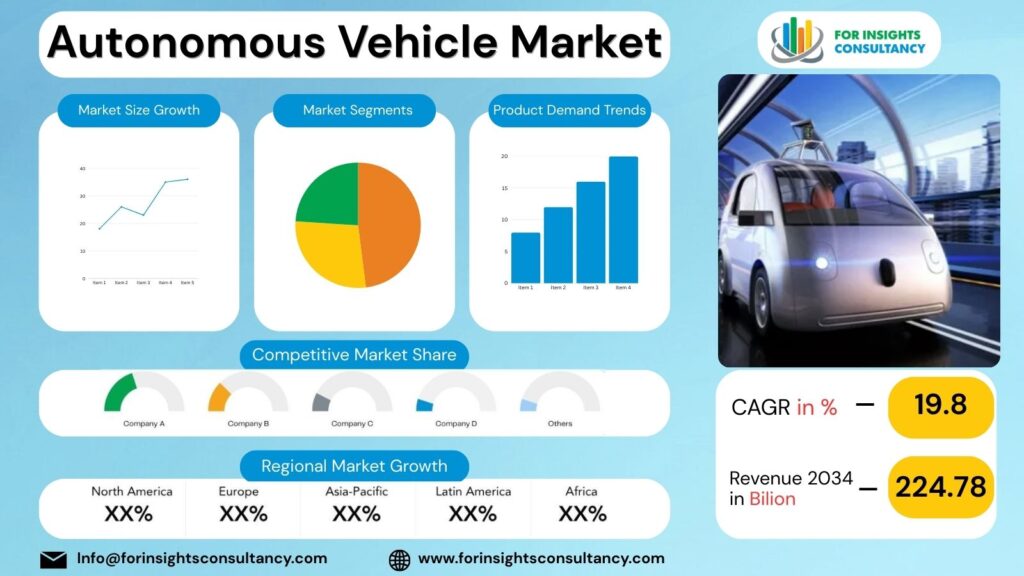
Autonomous Vehicle market is probable to reach USD 224.78 Billion by 2034, up from USD 73.49 Billion in 2025. During the forecast period 2025 to 2034, the industry is projected to expand at a CAGR of 19.8%.
Autonomous Vehicle Market: Overview and Growth in the Upcoming Year
Autonomous Vehicles Market has grown rapidly in recent years due to technological advancements as well as a shift in consumer preference towards greener ways of traveling. To enable fully autonomous vehicles on the market, leading industry players such as Tesla, Waymo, and Uber have been making substantial investment in R&D.
The potential for improving road safety is among the main factors driving growth of the market for autonomous vehicles. Because autonomous cars have sophisticated sensors and artificial intelligence systems, they can react more quickly and correctly than human drivers, which could lead to fewer accidents.
The future of the market for autonomous vehicles appears promising. One of the most important developments to keep an eye on is the introduction of autonomous vehicles in ride-sharing as well as delivery services. Companies such as Uber or DoorDash have already begun conducting tests of autonomous delivery trucks in selected cities and we are likely to see a greater spread of adoption over the next few years.
Another fascinating innovation in the market for autonomous vehicles is the move toward fully autonomous vehicles that do not have pedals or steering wheels. These vehicles, also known as level 5 automated vehicles in the test phase, but have the potential to completely change our perception of transportation.
In addition to the advances of technology, politicians as well as regulators also play an essential influence on the development of an market for autonomous vehicles. All governments around the globe are working to establish a system that will ensure the safe use in public roadways of vehicles that are autonomous, while making sure that they address questions of liability and ethics.
Autonomous Vehicle Market Top Companies Covered In This Report:
Evaluate The Strategic Positioning And Innovation Pipelines Of Leading Market Companies-From Multinational Enterprises To Disruptive Regional Firms. Understand How Key Players Are Innovating, Expanding, And Capturing Value, And Use Competitive Benchmarks To Plan Your Next Move.
- Toyota Kirloskar Motor
- Volkswagen Group
- Waymo LLC
- AUDI AG.
- Ford Motor Company
- Mercedes-Benz Group
- Nuro, Inc.
- ai
- Tesla
- Zoox, Inc.
Autonomous Vehicle Market Company News
Mercedes-Benz
January 6, 2026 Mercedes to offer autonomous driving tech for US city streets
Mercedes-Benz (MBGn.DE), opens new tab said on it will launch a new advanced driver-assistance system in the United States later this year that lets its vehicles operate autonomously on city streets under driver supervision.
Tesla
January 13, 2026 Tesla’s profit engine is sputtering. Elon Musk has bet its future on a promise he’s far from delivering
Market Dynamics
Trends
Integration of Artificial Intelligence
In 2026, we’re likely to be seeing a greater use of artificial intelligence (AI) for autonomous vehicle. AI powered systems are expected to increase the capabilities of autonomous vehicles that allow them to take instantaneous decisions and navigate through intricate traffic scenarios with ease and effectiveness.
Advanced Sensor Technology
Another major development in the market for autonomous vehicles is the growth of sensors. In the next few years we’ll see the advancement of more advanced sensors, like radar and LiDAR that allow vehicles to efficiently discern and interpret their surroundings. This will dramatically increase safety and security in autonomous driving.
Regulatory Frameworks and Standardization
As autonomous vehicles increase in use on our roads it is crucial to develop strong regulatory frameworks as well as standards-setting processes. in 2026, we are able to expect the introduction of new regulations that will ensure the safety of autonomous vehicles and deal with ethical and liability concerns.
Connectivity and Communication
Autonomous vehicles’ future rests in their ability to communicate with one their counterparts and the surrounding infrastructure. Vehicle-to-vehicle (V2V) and vehicle-to-infrastructure (V2I) communication will play a crucial role in enhancing coordination and safety on the road, paving the way for fully autonomous transportation systems.
Mobility as a Service (MaaS)
The rapid growth of Mobility as a Service (MaaS) platforms is changing the face of the automotive sector, providing easy and cost-effective transportation options for customers. In 2026, we’re likely to witness a rise in MaaS adoption and autonomous vehicles taking on an integral part in providing on-demand and sharing mobility solutions.
Restraints
High Costs
The initial costs for development and production for autonomous cars are significant and make them unaffordable for the average consumer.
Technology Limitations:
Despite advances, the our technology is still unable to meet the demands in handling challenging driving scenarios as well as adverse weather conditions.
Cybersecurity Issues:
The threat of cyber-attacks on autonomous vehicles pose a serious danger to the safety of passengers and security of data.
Legal and ethical dilemmas:
Issues such as liability in auto-related accidents vehicles, privacy of data, and ethical decisions made by AI algorithms are still unsolved.
Infrastructure Readiness:
The deployment of autonomous vehicles requires substantial infrastructure upgrades to support features such as vehicle-to-infrastructure communication and charging stations.
Opportunities
Enhanced Safety and Efficiency
Autonomous vehicles are able to transform road safety by reducing accidents that are caused by human errors. Autonomous cars are equipped with the latest sensor systems and AI that enable them to navigate the roads as well as traffic in a manner that is precise and speed. This added safety feature won’t just save lives but also help reduce traffic congestion and boost overall efficiency of transportation.
Sustainable Transportation Solutions
Another significant possibility in the market for autonomous vehicles is the possibility of sustainable solutions for transportation. As the world struggles with the impacts of climate change as well as pollution The need for green transport options has never been more urgent. Autonomous vehicles can be used to lower harmful emissions and reduce the dependence on fossil fuels, by optimizing driving routes and routes to maximize efficiency.
Challenges
The Rise of Artificial Intelligence
One of the major obstacles facing the autonomous car market is the advancement AI (AI) technologies. Autonomous vehicles heavily rely upon AI algorithms for navigation on through roads and read traffic signals and make quick decisions. While AI advances, technology will develop and improve, the auto industry must ensure that autonomous vehicles adjust to the changing road conditions and unexpected circumstances in a secure and efficient way.
Regulatory Hurdles
Another major challenge facing the market for autonomous vehicles is managing the complicated regulatory landscape. Different regions and countries have various rules and regulations regarding autonomous vehicles. This can make it difficult for companies looking for new opportunities to enter markets. Specific guidelines and standards will have to be formulated to ensure safe as well as legal operations of automated vehicles across the globe.
Cybersecurity Concerns
As autonomous vehicles get more connected and dependent of data and information, cyber security issues are becoming a significant concern for the sector. Hackers can penetrate autonomous vehicle networks, placing the safety of passengers as well as others on the road at risk. Manufacturers should invest in strong cybersecurity measures to safeguard autonomous vehicles from cyber-attacks and ensure the security and privacy of all who are on the vehicle.
Infrastructure Adaptation
To allow autonomous vehicles to function efficiently, existing infrastructure must be modified to accommodate this new form of transport. The roads will have to be modernized with sophisticated sensors and communications systems for autonomous vehicles while charging and parking stations will need to be designed to meet the increasing demand. Collaboration with city planners and the policymakers is essential to ensure a smooth shift to self-driving vehicles.
Public Perception and Acceptance
Finally, the autonomous vehicle market has to overcome the public’s perceptions and issues of acceptance to be accepted by the masses. A lot of people are still skeptical about autonomous vehicles with concerns over security, reliability, and the possibility of job loss. Informing the public about the advantages self-driving vehicles and conducting rigorous tests, and using transparent communications strategies are crucial to build trust and acceptability from the public.
Key Segments
Segmentation By Vehicle Type
- Passenger Vehicle
- Commercial Vehicle
Segmentation By Level of Autonomy
- Level 1
- Level 2
- Level 3
- Level 4 & 5
Segmentation By Application
- Transportation
- Industrial
- Commercial
- Personal
- Defense
Global Geographic Coverage:
The Report Provides In-Depth Qualitative And Quantitative Data On The Autonomous Vehicle Market For All Of The Regions And Countries Listed Below:
North America
As technology advances rapidly, technology autonomous vehicle technology, the market North America is experiencing significant growth. This article will examine the anticipated growth of GDP and the inflation rate for the region as well being the main factors that affect the market like the government’s subsidy, trends in culture and the preferences of consumers.
Projected GDP Growth and Inflation Rate
The projected growth of GDP in North America is expected to be strong due to a variety of factors like technological innovations and infrastructure improvement, as well as changing consumer preferences. With an economy that is stable and a expanding middle-class, this region offers an opportunity for manufacturers of autonomous vehicles.
In terms of the rate of inflation policiesmakers are in North America are closely monitoring the effects of different economic indicators to ensure stability of prices and sustained growth. This creates a favorable environment for businesses to flourish and invest in the latest technologies such as autonomous vehicles.
Local, Non-Replicable Drivers
Every nation within North America has its unique set of local drivers, which affect the market for autonomous vehicles. For instance for instance, in the U.S., government subsidies for electric vehicles as well as autonomous technologies play a significant part in encouraging adoption among customers. In Canada there is a strong emphasis on eco-friendly and sustainable transportation solutions fuels the need for self-driving vehicles.
Similar to Mexico the rising middle class and growing urbanization is creating what the future will look like for autonomous transportation. Knowing these local drivers is vital for businesses to adjust their strategies and products to the needs of the market.
Dominant and Fastest-Growing Channels
For North America, the dominant channel to distribute autonomous vehicles is via direct sales from dealers and manufacturers. With the advent in online shopping platforms as well as e-commerce, online channels are fast gaining momentum as the fastest-growing distribution channels of autonomous vehicle.
People are increasingly using online platforms to look up and compare prices, as well as buy autonomous vehicles. This makes it crucial for car manufacturers to have a robust digital presence as well as an omnichannel strategy for reaching a wider public.
Europe
The market for autonomous vehicles in Europe is growing rapidly due to advancements in technology and evolving preferences of consumers. As the economy of Europe grows and it is anticipated to rise substantially in the coming years. This article we’ll examine the projected growth in GDP and the rate of inflation in Europe as well as the major factors affecting the market for autonomous vehicles within this region. Projected GDP Growth and Inflation Rate
According to the latest forecasts, Europe is expected to witness a growth in GDP of 2.3 percent in the coming year, and a low rate of inflation of 1.8 percent. The steady growth in the economy has created an environment that is favorable for market of autonomous vehicles because people are more likely to invest in new transport solutions.
Local, Non-Replicable Drivers
In France the country, a government-specific subsidies for electric cars has served as a key factor in the growth of the market for autonomous vehicles. The subsidy has prompted consumers to choose eco-friendly transportation options, which includes autonomous vehicles. In Germany the increasing popularity of festivals for cultural purposes is also a factor in boosting interest among consumers in autonomous vehicles as people are looking for reliable and convenient transport alternatives.
Dominant and Fastest-Growing Channels
The primary method of acquiring autonomous vehicles in Europe is sales on the internet that provide consumers with an easy way to look up and buy vehicles. However, the fastest-growing way to sell is by way of partnerships with ride-sharing services in the hopes of helping companies incorporate automated vehicles in their fleets. This trend is likely to increase as more businesses realize the potential of autonomous vehicles in the transport industry.
Consumer Preferences
In Europe consumers are increasingly focusing on sustainable sourcing, ethical purchasing, and locality when they make purchasing choices. This shift in preferences of consumers has had an impact on the market for autonomous vehicles, manufacturers are focusing on the development of sustainable and environmentally responsible vehicles. While status and price are important in certain emerging markets but sustainability and ethical sourcing have emerged as important aspects for European buyers.
Asia Pacific
Projected GDP Growth and Inflation Rate
According to recent forecasts according to recent projections, according to recent projections, the Asia Pacific region is expected to see a steady growth in increase in its GDP in the coming years thanks to the robust growth of the major economies like China, India, and Japan. The expected growth in the economy is likely to drive investment in infrastructure and technologies which will allow the market for autonomous vehicles to grow.
Regarding the inflation rate, the majority of regions are expected to have the same prices. This will create a favorable working environment for companies operating on the self-driving vehicle field. A low rate of inflation will ensure that consumers have purchasing power as well as encourage the use of the latest technologies for the transportation industry.
Local Drivers Influencing the Market
One of the major factors that are influencing the market for autonomous vehicles within the Asia Pacific region is the growing focus in smart urban initiatives of governments throughout the region. Countries such as Singapore, South Korea, and China are investing hugely in developing smart transportation systems that comprise autonomous vehicles as a major element. These initiatives aim towards improving mobility in cities and reducing congestion in traffic and encouraging sustainable development.
In addition, factors of culture like the importance of keeping a clean face and maintaining harmony within Asian societies are driving the use autonomous vehicles. In places such as Japan as well as South Korea, where respect for authority and the observance of rules is highly valued as well as respect for authority, autonomous vehicles are viewed as a means to increase road safety and decrease the number of the risk of accidents due to human mistakes.
Dominant and Fastest-Growing Channels
The most popular channel for the distribution and sale for autonomous cars across the Asia Pacific region is through collaborations between technology firms, automakers and the government agencies. Collaboration between these actors is crucial for the development and implementation of autonomous vehicles, since they require the latest technological advancement, regulatory acceptance and the public’s acceptance for them to be successful.
The fastest-growing channel for autonomous vehicles in the region is through ride-sharing and mobility-as-a-service (MaaS) platforms. Companies such as Grab, Ola, and DiDi have partnered with manufacturers of autonomous vehicles to provide self-driving taxi services to urban regions. The trend is expected to grow as more cities adopt innovative transportation strategies to ease traffic congestion and improve sustainable mobility.
Frequently Asking Questions
What is the Autonomous Vehicle market size and growth forecast?
Autonomous Vehicle Market is predicted to grow from USD 73.49 Billion in 2025 to approximately USD 224.78 Billion by 2034. the industry is estimated to expand at a CAGR of 19.8%.
Who are the key players in the Autonomous Vehicle market?
The Autonomous Vehicle Market Includes Major Companies Toyota Kirloskar Motor, Volkswagen Group, Waymo LLC, AUDI AG., Ford Motor Company, Mercedes-Benz Group, Nuro, Inc., Pony.ai, Tesla, Zoox, Inc, Others.
What are the current and future trends for Autonomous Vehicle market?
The market is expanding rapidly with rising adoption of advanced AI-driven driving systems, increasing deployment of robotaxi and shared mobility services, and integration with smart city infrastructure.
What are the challenges facing the Autonomous Vehicle market?
Challenges facing the Autonomous Vehicle market include regulatory uncertainty and safety concerns, as governments struggle to establish consistent legal frameworks and public trust remains low due to high-profile failures and complex real-world scenarios.
Which regions dominate the Autonomous Vehicle market?
North America dominates the Autonomous Vehicle market due to strong R&D investments, early technology adoption, and the presence of major autonomous vehicle developers in the U.S.
Report Features
This report gives the most complete information. The report on Autonomous Vehicle Market format has been designed so that it can provide the best value to the business. It offers crucial insights into the market’s dynamic and will aid in strategic decision-making for current players as well as those looking to join the market.
What Deliverables Will You Get in this Report?
|
Key
questions this report answers |
Relevant
contents in the report |
|
How big is the sales opportunity? |
In-depth analysis of the Global Autonomous Vehicle
Market |
|
How lucrative is the future? |
Market forecast and trend data and emerging trends |
|
Which regions offer the best sales opportunities? |
Global, regional and country level historical data
and forecasts |
|
Which are the most attractive Autonomous Vehicle
market Key segments? |
Market segment analysis and |
|
Which are the top Key players and Their Autonomous
Vehicle market positioning? |
Competitive landscape analysis, Market share
analysis |
|
How complex is the business environment? |
Porter’s five forces analysis, PEST analysis, Life
cycle analysis |
|
What are the factors affecting the Autonomous
Vehicle market? |
Drivers & Restraints |
|
Will I get the information on my |
Customized
Report as per your Business Needs Our analysts will work directly with you and
understand your needs Get data on specified regions or segments,
competitor and Vendors Data will be formatted and presented as per your
requirements Any
Requirement Contact Us: https://www.forinsightsconsultancy.Com/Contact-Us |
Table of Contents
For TOC Contact us: https://forinsightsconsultancy.com/contact-us/