

Biodegradable Plastics Market Growth Analysis Research Report By Type (PLA (Polylactic Acid), Starch Blends, PHA (Polyhydroxyalkanoates), PBS (Polybutylene Succinate), PBAT (Polybutylene Adipate Terephthalate), Others), By Application (Packaging, Agriculture, Textiles, Consumer Goods, Automotive, Others )- and Global Forecast to 2034
Mar-2026 Formats | PDF | Category: Chemial & Material | Delivery: 24 to 72 Hours
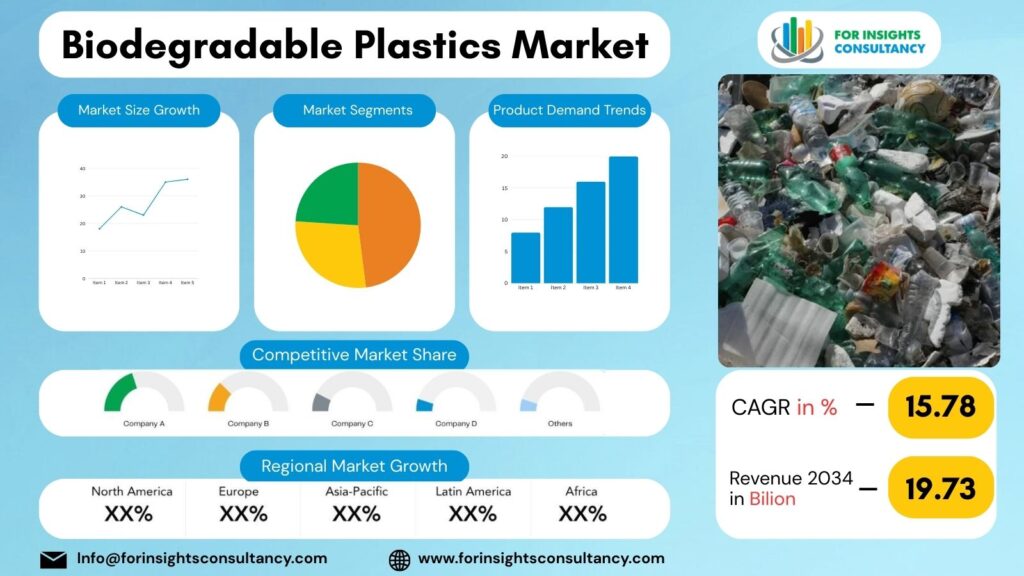
Biodegradable Plastics Market report: valued at USD 5.48 Billion in 2025, forecast to hit USD 19.73 Billion by 2034, expanding at 15.78% CAGR due to rising green packaging demand.
Overview of the Biodegradable Plastics Market and Expected Growth (2026)
The Biodegradable Plastics Market is gaining a lot of momentum in 2026 as industries and governments start prioritizing sustainable materials to tackle the issues of plastic waste and environmental pollution. Biodegradable Plastics are a better alternative to conventional petroleum-based plastics, as they undergo natural degradation from microbial processes into components of water, carbon dioxide, and biomass. Biodegradable materials are used in packaging, agricultural films, food service items, and consumer products, where disposal and environmental issues are critical. These include polylactic acid (PLA), polyhydroxyalkanoates (PHA), and certain starch-based plastics.
In 2026, the market is projected to grow as a result of the stiffened environmental regulations, increasing consumer awareness towards sustainable products, as well as plastic waste elimination commitments made by corporations in relation to global supply chain operational activities. Governments are formulating regulations that mandate the use of compostable, and biodegradable materials in the packaging and single-use products, especially within the food and beverage industry. Manufacturers are also making improvements regarding the biodegradability and compostability of their products by investing in bio-based polymers.
The most prominent user of biodegradable plastics is the packaging industry. This is because of the relatively recent expansion of e-commerce, food delivery services, and the adoption of packaging in a more sustainable manner. Also, the use of some biodegradable plastics is increasing in agriculture. For example, biodegradable mulch films and compostable plant pots don’t require a plastic removal and disposal step after the end of use. Ongoing research in the science of bio-polymers is leading to improvements in durability, heat resistance, and the ability to be processed with conventional plastic manufacturing equipment.
For the next ten years, the most influencing factors for growth of biodegradable plastic are sustainability objectives, regulation, and advancements in bio-based materials. These factors will change the conventional plastic industry globally.
Market Dynamics 2026
Growth Drivers
Increased International Attention to Plastic Waste
Recently, governments and environmental agencies have heightened their focus on plastic pollution, biodegradable and compostable alternatives to packaging, and food service and retail industry waste. Single use plastic policies are expediting a move to enduring alternatives.
Increased Need for Sustainable Packaging
The food, beverage, and e-commerce industries have begun to incorporate biodegradable plastic into their packaging. This practice helps them meet their sustainability goals and lowers their environmental impact. Brands seek to meet consumer demand for eco-friendly products and, as a result, are introducing compostable packaging.
Restraints
Uncertainty of Consumers’ Disposal and Disposal Behavior
Some customers can’t tell the difference between biodegradable, compostable, and recyclable plastics. Consumers mix biodegradable plastics and other types of recyclables, and this creates problems for waste management systems.
Inconsistent Availability of Bio Based Feedstocks
Biodegradable plastics can be produced from agricultural feedstocks such as corn, sugarcane, and starch. Due to climate variability, the availability of crops changes, and there may be competing demands for food supply, which can destabilize and increase the price of these raw materials.
Opportunities
Government Encouragement Towards Sustainable Plastics
New legislation on single use plastics has created markets for the production of biodegradable plastics. Legal requirements for sustainable packaging and reduced waste have begun to push industries towards biobased and compostable materials.
Development Of Bio-Based Polymers
Novel biodegradable materials like PLA and PHA are also becoming more sophisticated and robust. Such advancements are broadening the scope of use for biodegradable plastics to include the packaging of electronics, medical devices, and other high-performance packaging.
Challenges
Misunderstanding of Biodegradable, Compostable, and Recyclable Plastics
There is a wide misunderstanding of eco-friendly plastics within both the consumer and business spheres. The result of this misunderstanding is improper disposal, clogged recycling streams, and inefficiencies in waste management systems.
Some Manufacturing Systems Have Limited Processing Versatility
Some types of biodegradable plastics require changes in manufacturing systems or processing conditions. Companies that operate with conventional plastic processing systems may face a cost and technical burden when moving to biodegradable plastics.
Top Companies Covered In This Report
(Major global and regional players shaping the industry)
- NatureWorks LLC
- BASF SE
- Novamont S.p.A.
- TotalEnergies Corbion
- Danimer Scientific
- Mitsubishi Chemical Group Corporation
- Biome Bioplastics Limited
- Toray Industries Inc.
- Futerro
- Plantic Technologies Limited
Biodegradable Plastics Industry Company News 2025 and 2026
BASF SE – 2025
BASF announced that it will showcase sustainable materials and renewable-feedstock solutions at the K 2025 plastics trade fair. The company is highlighting products developed through its biomass balance approach, which replaces fossil resources with renewable raw materials to lower the carbon footprint of plastic production.
TotalEnergies Corbion – 2025
The company continued expanding its PLA bioplastics portfolio and promoted its Luminy® PLA materials as part of the global transition toward renewable carbon and circular plastic systems. The firm also showcased innovation in bio-based plastics technologies at international industry conferences in 2025.
NatureWorks LLC – 2025
NatureWorks continued expanding innovation in polylactic acid (PLA) materials used in packaging and consumer goods. The company has been involved in large-scale investments and capacity expansions aimed at meeting the growing demand for sustainable plastics worldwide.
Detailed Segmentation and Classification of the report (Market Size and Forecast – 2034, Y-o-Y growth rate, and CAGR):
By Type
- PLA (Polylactic Acid)
- Starch Blends
- PHA (Polyhydroxyalkanoates)
- PBS (Polybutylene Succinate)
- PBAT (Polybutylene Adipate Terephthalate)
- Others
By Application
- Packaging
- Agriculture
- Textiles
- Consumer Goods
- Automotive
- Others
By End-Use Industry
- Food & Beverage
- Healthcare
- Agriculture
- Consumer Goods
- Electronics
- Others
Regional Deep-dive Analysis:
The report provides in-depth qualitative and quantitative data on the Biodegradable Plastics Market for all of the regions and countries listed below:
North America
United States
The United States is the North American market leader for bioplastics due to the rise in sustainable packaging solutions in the food service, retail, and e-commerce industries. As many states have implemented single-use plastic bans, businesses are adapting to the use of compostable bags, food containers, and packaging. New bio-polymer technologies are being developed to advance the performance and scalability of bioplastics.
Canada
With the introduction of new laws to combat plastic waste and encourage the circular economy in Canada, the adoption of plastic alternatives is shifting to biodegradable solutions. Government regulations on single-use plastics and the increase in customers seeking bioproducts has pushed the food retail and healthcare industries to offer packaging alternatives that are biodegradable.
Mexico
Mexico has implemented the use of biodegradable plastics in response to the bans and regulations regarding plastic bags. There are now greater compostable and biobased packaging alternatives in food delivery, retail, and for environmentally-conscious consumers.
Europe
Germany, France, The Netherlands, Belgium
Germany, France, The Netherlands, and Belgium are Western European countries with well-established markets for biodegradable markets. The focus on environmental protection and strategies for recycling plastics and corporate sustainable recycling initiatives put these economies at the forefront of Europe. These countries also focus on the promotion of compostable packaging and bio-based, compostable materials. Germany and France are also leading the initiative for bio-sustainable materials and compostable packaging in the circular economy strategies that are aimed at cutting down plastic packaging for retail and food services.
Italy, Spain, and Portugal
Italy, Spain, and Portugal are referred to the South European countries. They are expanding the European biodegradable plastic market. The emphasis is on food packaging, agricultural films, and compostable bags. Italy, in Western Europe, is leading the market for compostable plastic bags in food service and shopping bags. The country also has a national statute that provides for incentives to biodegradable biodegradable plastics.
Sweden, Denmark, and Finland
Sweden, Denmark, and Finland are called Northern European countries. They also emphasize sustainable innovative materials that are coupled with elaborate and developed waste management. The countries also lead in the investment of several circular economy strategies and promote the use of biodegradable materials in order to reduce plastic waste and increase the recovery of recyclable waste.
Poland, the Czech Republic, and Hungary
With the increase in environmental awareness and the European Union Circular Plastic Economy regulations, Eastern Europe is also expanding the market for biodegradable plastics. The growing plastic packaging demand encourages the industry to invest in compostable packaging.
Asia-Pacific
China
China plays a significant role in the production of biodegradable plastics in the Asia-Pacific region because of the government restrictions on conventional plastics and their use in packaging and bags. Manufacturers are developing compostable and plant-based alternatives to plastic because of the rapid growth of food delivery services, e-commerce, and retail.
India
India is witnessing an increase in the use of biodegradable plastics due to government countermeasures against plastic waste. Legislation on the use of single-use plastics, along with heightened awareness of the problem, is driving the adoption of biodegradable alternatives in the packaging, agricultural films, and food service sectors.
Japan and South Korea
The advancement of technology and sustainable materials in South Korea and Japan is rapid due to their robust research and corporate sustainability. This research and corporate commitment is vital for manufacturing cutting-edge bio-based polymers for packaging, electronics, and consumer goods.
Southeast Asia (Thailand, Vietnam, Indonesia, Malaysia)
The promotion of biodegradable plastics in Southeast Asia has intensified in the last years to tackle marine plastic pollution and urban waste. This region is characterized by rapid promotion of Sustainable Development Goals (SDG) and Eco-Positive Packaging along with policymakers’ adoption of Guidelines and eco marked standards on sustainable packaging.
Australia and New Zealand have implemented stricter environmental regulations and enhanced waste management practices to combat plastic pollution across both nations. Initiatives funded by the government to promote compostable packaging and the circular economy have incentivized businesses to use biodegradable plastics in retail packaging and food service.
Middle East and Africa
Moving in the same direction concerning the adoption of sustainable materials and biodegradable plastics to support environmental and circular-economy initiatives, the Gulf Cooperation Council (GCC) member countries, including the United Arab Emirates, Saudi Arabia, and Qatar are adopting regulations that will see the UAE phasing out more single-use plastic products and encouraging businesses to use biodegradable alternatives and eco-friendly materials.
Africa
South Africa, in comparison to other African countries, has a more developed market in biodegradable plastics due to the increased awareness of the environment and the improvement of waste management. There is a growing demand for biodegradable plastics in packaging, agricultural films, and in the other consumer goods as more and more companies adopt sustainable packaging strategies to reduce plastic waste.
North Africa (Egypt, Morocco, Tunisia)
North African countries are harmonizing their regulations on conventional plastics and the promotion of eco-friendly alternatives. The growing regulations on the restriction of the use of plastic bags and those that promote the use of biodegradable materials are facilitating the increased adoption of biobased plastics to be used in the retail packaging and food services in the bio-plastics industry.
East Africa (Kenya, Rwanda, Tanzania)
The policies that have been developed to minimize the use of plastics in East Africa have turned this part of the African Continent to be of great importance in the adoption and reduction of plastic waste. The ban on plastic bags and single-use plastics, introduced in Kenya and Rwanda, has promoted the use of biodegradable packaging and other alternative materials.
Frequently Asked Questions with Answers
What is the Biodegradable Plastics market size and growth forecast?
Biodegradable Plastics Market is probable to reach a value of USD 5.48 Billion in 2025 and is anticipated to grow to almost USD 19.73 Billion by 2034. This expansion reflects a compound annual growth rate (CAGR) of 15.78% during the forecast period from 2026 to 2034.
Who are the key players in the Biodegradable Plastics market?
The Biodegradable Plastics Market Includes Major Companies NatureWorks LLC, BASF SE, TotalEnergies Corbion, Novamont S.p.A., Danimer Scientific, Mitsubishi Chemical Group Corporation, Biome Bioplastics Limited, Toray Industries Inc., Futerro, Plantic Technologies Limited, Others.
What are the current and future trends for Biodegradable Plastics market?
Current and future trends in the biodegradable plastics market include increasing adoption of bio-based polymers (PLA, PHA), stricter global regulations on single-use plastics, and rising demand for sustainable packaging across food, retail, and e-commerce industries.
Which regions dominate the Biodegradable Plastics market?
Europe and Asia-Pacific dominate the biodegradable plastics market due to strong environmental regulations, growing sustainable packaging demand, and expanding bioplastics production capacity.
Key insights provided by the report that could help you take critical strategic decisions?
- Regional reports analyse product/service consumption and market factors in each region.
- Reports highlight possibilities and dangers for suppliers in the Biodegradable Plastics Market business globally.
- The report identifies regions and sectors with the highest growth potential.
- It provides a competitive market ranking of major companies, as well as information on new product launches, partnerships, business expansions, and acquisitions.
- The report includes a comprehensive corporate profile with company overviews, insights, product benchmarks, and SWOT analysis for key market participants.
Customization: We can provide following things
1) On request more company profiles (competitors)
2) Data about particular country or region
3) We will incorporate the same with no additional cost (Post conducting feasibility).
Any Requirement Contact us: https://www.forinsightsconsultancy.com/contact-us/
Biodegradable Plastics Market Top queries
how are biodegradable plastics made
Biodegradable plastics consist mainly of renewable biomass such as starch from plants (like corn and sugarcane) and from cellulosic and soy protein sources, as well as from biomass-based microbial polyesters (PHA). Examples are Polylactic Acid (PLA) resulting from the fermentation of plant starch, and Polyhydroxyalkanoates (PHAs) from bacterial sources. These substances will be broken down to water, CO2 or methane.
what are biodegradable plastics
Biodegradable plastics are made to decompose as a result of microorganisms (bacteria and/or fungi) to water, carbon dioxide and biomass, and only in certain situations. These types of plastics are made from renewable resources such as starch and cellulose, and are used in packaging, farming, and medical uses.
are plastics biodegradable
Standard types of plastics do not decompose naturally. Instead, they break into tiny pieces known as microplastics which can last for hundreds of years. Some commercially available products are described as “biodegradable plastics”. However, these products do not decompose in a natural environment. They are only considered biodegradable if they decompose in a designated industrial composting
Table of Contents
For TOC Contact us: https://forinsightsconsultancy.com/contact-us/