
Rail Transit Passenger Vehicles Market Share, Demand and Competitive Landscape Analysis
Jun-2026 Formats | PDF | Category: Transportation | Delivery: 24 to 72 Hours
Rail Transit Passenger Vehicles Market Size & Forecast
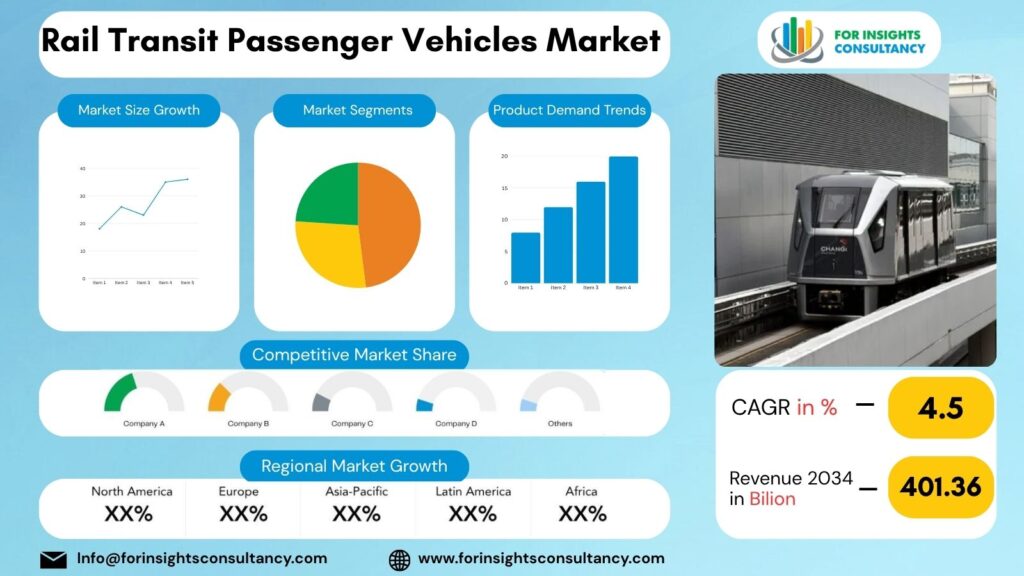
- Market Size (2026): USD 294.86 Billion
- Forecast (2034): USD 401.36 Billion
- CAGR (2026–2034): 4.5%
- Base Year: 2025
- Key Segments: By Vehicle Type (Metro Rail Vehicles, Light Rail Vehicles, Commuter Rail Vehicles, High-Speed Rail Vehicles, Monorail & Tram Vehicles), By Propulsion (Electric, Hybrid, Hydrogen-Powered), By Application (Urban Transit, Intercity Transit).
- Top Regions: North America, Europe, Asia-Pacific, Latin America, and Middle East & Africa, with Asia-Pacific dominating due to large-scale rail infrastructure investments, rapid urbanization, and expanding metro rail networks in China, India, and Southeast Asia.
Rail Transit Passenger Vehicles Market Executive Summary
The international Rail Transit Passenger Vehicles Market is growing up at a constant rate because of the global rise in urbanization process, initiatives and investments in the public transport infrastructure and the articular efforts made by the government to encourage sustainable developed mobility alternatives. Increasing urban populations in Metropolises, rising vehicle congestion and demand for effective mass transit facilities are motivating nations across the globe for development of ultra-modern rail transit system, thus strengthening the market.
Growth in people‘s need for intelligent, energy-efficient and high-capacity means of passenger transportation and upward trend of more sustainable urban mobility practices are definitely boosting the increased market penetration of the advanced rail transit passenger vehicles. Governments and authorities worldwide are heavily funding in metro rail, light rail transit (LRT), commuter rail, high-speed rail and monorail projects due to their various economic, congestion-prone urban and mobility advantages to enhance connectivity and reduce carbon emissions.
Besides, new trends of premiumization, sustainable development and digital transformation are reshaping competitive context. Rail operators are gradually providing modern passenger cars equipped with improved comfort features, intelligent passenger information systems, state-of-the-art safety technology, and enhanced accessibility solutions. Premium journey segments, onboard connectivity and smart mobility services are becoming the new competitive differentiation in transit markets.
The rail transit ecosystem is being reshaped by technology as disruption extends beyond new vehicles to encompass the entire value chain. Improvements in automation, predictive maintenance, artificial intelligence, Internet of Things (IoT) connectivity, and energy efficient propulsion systems are enabling the manufacturers to design new passenger vehicles that are more efficient to operate, less costly over their lifetime, safer for the passengers and less harmful to the environment. Increasing penetration of electric and hydrogen-powered rail solutions is adding momentum to this transition.
Given the large upcoming investments in infrastructure, market participants are aiming at product innovation, network cooperation, production localization and penetrating into developing markets in order to benefit from the opportunities. The Rail Transit Passenger Vehicles Market will further develop in the forecasting period with the continuing investments made by governments worldwide in sustainable transportation and smart city projects.
Rail Transit Passenger Vehicles Market Overview (2026)
The Rail Transit Passenger Vehicles Market: consists of a very broad spectrum of passenger transportation vehicles used in rail systems around the world including passenger cars used on metro, suburban and intercity type (interurban) rail transit systems, including metro trains, light rail vehicles (LRVs), commuter trains, monorails, trams and high speed rail vehicles. The vehicles are required to be safe, reliable and eco friendly as much as possible, so as to support the existing transportation needs of a rapidly urbanizing demographic profile. The market includes vehicles manufacturing, updating, refurnishing, propulsion and other onboard systems and components.
In the last ten years, rapid urbanization, more investment in public transportation infrastructure, and the global effort toward sustainable mobility have significantly changed the industry. Millions of public dollars poured into rail-based transit projects, as city planners and elected officials consistently recognized it as the best way to mitigate traffic congestion, decrease greenhouse gases and enhance the urban fabric. As a consequence, more state-of-the-art rail vehicles with advanced features and environmentally friendly power trains appeared on the market.
The general public‘s growing awareness of environmental issues and public transportation‘s advantages is affecting the choices made by consumers in both the developed and the developing worlds. Consumers are increasingly requiring alternatives that are dependable, reasonably priced and have a lower impact on the environment which is causing government authorities to increase investments in rail transit systems and overhaul existing fleets. The population‘s desire for convenient, comfortable, connected travel will also promote the development of next-generation passenger vehicles.
Technology is changing the faces of the market by the incorporation of automation, artificial intelligence, predictive maintenance systems, IoT (Internet of Things) connectivity, innovative signalling solutions, and smart passenger information systems on modern rail transit vehicles. High profile and energy saving traction systems, regenerative breaking systems, adjunct real time monitoring systems, and improved safety features are also being built-in wherever necessary.
Regulatory developments aimed at emission abatement, transportation safety and accessibility standards and city / urban development sustainable practices remain a driver for market development. Government initiatives toward promoting electrification, adopting clean energy and upgrading public transit are spurring market development.
The growing urbanization and rise in urban population resulting in investment in smart mobility solutions is likely to foster market growth in the Rail Transit Passenger Vehicles Market. Increased investments in metro rail projects, high-speed rail corridors, fleet modernisation programs, and green transportation projects are likely to support market growth in the long term.
Rail Transit Passenger Vehicles Market Dynamics 2026
Growth Driver
Rising Demand for Sustainable and High-Capacity Public Transportation
One of the primary factors positively influencing the Rail Transit Passenger Vehicles Market is increasing requirement of effective, environmentally friendly and high-capacity transportation systems. Increasing urbanization and population growth are increasing the load on existing transport infrastructure and encouraging governments and public transit agencies to implement rail-based transport solutions. Rail transit provides for the high-capacity transportation of significant numbers of commuters.
The major metro, light rail and commuter rail networks across Asia-Pacific, Europe and North America are all investing heavily in new lines and rolling stock to meet growing mobility requirements. Public transportation authorities and governments are investing heavily in railway modernization and fleet replacement throughout the world as part of green transportation agendas. Rail‘s clear energy advantages over road significantly bolster the long-term outlook of the market.
Growth in Smart Mobility and Railway Modernization Initiatives
The widespread acceptance of smart mobility solutions along with extensive railway modernization programs across the globe are driving compelling demand for modern rail transit passenger vehicles; wherein transit authorities are becoming more involved in investments for next generation trains that feature innovative intelligent passenger information systems, real time monitoring technologies, predictive maintenance solutions, automated operations and improved safety.
The ever-increasing trend towards digitalization and the development of smart cities is spurring transportation players to utilize more and more technological sophisticated rail fleets to address efficiency in operations and passenger experience. Likewise, the upgrade from conventional diesel to electric and eventually hydrogen based rail vehicles is also picking up speed as governments set more stringent clean transportation aims.
Metros and urban transit systems require new generation, energy efficient digitally connected passenger vehicles. Modernization programs driven by replacement of aging rolling stock are creating enormous opportunities for manufacturers. With investments in metro rail networks, high-speed rail corridors and urban transit infrastructure increasing across the world, the demand for innovative rail transit passenger cars should remain high over the forecast period.
Key Trends
Premiumization Transforming Passenger Experience
Premiumization, in the context of Rail Transit Passenger Vehicles Market, is on the rise as operators put greater emphasis on things such as passenger comfort, convenience and overall travel experience. These days, transit vehicles on the rail systems are not only fitted with ergonomic seats but are also equipped with technologies such as Wi-Fi system, in-built infotainment systems, real-time passenger information displays, greater accessibility and improved interiors. Premium metro rail and high-speed rail services are all the rage among commuters and travelers going for convenient, reliable and comfortable transportation. All these factors have led to the premiumization of rail transit vehicles.
Sustainability Driving Green Rail Transportation
Environmental sustainability continues to be the top trending theme influencing the rail transit business. Transportation authorities across the globe are making rail a key element of their overall carbon reduction initiatives and sustainable mobility plans. Not only are rail vehicle manufacturers designing energy-efficient vehicles using lightweight materials, regenerative braking technology, low emission propulsion system and minimized total life cycle effects but electric and fuel-cell/hydrogen-powered trains are gaining acceptance. Several operators are also employing sustainable practices in manufacturing, maintenance and recycling.
Technological Innovation Accelerating Smart Rail Development
Soaring Technological progress has been transforming the rail transit passengers’ vehicles to a sophisticated transportation system of high connectivity and intelligence. The adoption of artificial intelligence (AI), Internet of Things (IoT), predictive maintenance applications, sophisticated diagnosic systems, and automated train operation, can all enhance the performance, safety, and reliability of rail network with increased operational efficiencies and reduced maintenance costs. The adoption of digital monitoring system for real-time on-line performance monitoring and reporting, the reduction of downtime and maintenance costs are of benefits. Developments in battery technology, hydrogen fuel cell propulsion, driverless operation, cybersecurity, and smart signaling platform offer an attractive promise in terms of superior network performance and passenger experience all while enabling rail transit agencies to revolutionize their rail systems and expand capacity in a more cost-effective manner for the future.
Rail Transit Passenger Vehicles Market Top Companies Covered In this Report are
- CRRC Corporation Limited
- Alstom S.A.
- Siemens Mobility GmbH
- Hitachi Rail Limited
- Kawasaki Railcar Manufacturing Co., Ltd.
- Stadler Rail AG
- Hyundai Rotem Company
- Construcciones y Auxiliar de Ferrocarriles (CAF)
- Talgo S.A.
- Škoda Transportation A.S.
- Mitsubishi Heavy Industries Ltd.
- Wabtec Corporation
- Toshiba Infrastructure Systems & Solutions Corporation
- Medha Servo Drives Pvt. Ltd.
- Bharat Earth Movers Limited (BEML)
Rail Transit Passenger Vehicles Market company news 2025 and 2026
CRRC Corporation Limited
CRRC continues to expand its global footprint through metro rail, commuter rail, and high-speed train projects. The company is investing heavily in intelligent train technologies, lightweight materials, and next-generation energy-efficient rolling stock solutions.
Alstom S.A.
Alstom has strengthened its position in sustainable mobility through advanced metro and regional train platforms. The company continues to develop hydrogen-powered and battery-electric train solutions while supporting major rail modernization projects worldwide.
Rail Transit Passenger Vehicles Market Segments
By Type
- Passenger Rail Transport
- Rail Freight
By Distance
- Long Distance
- Short distance
Rail Transit Passenger Vehicles Market Regional Insights
North America – Fleet Modernization and Smart Transit Investments
North America is experiencing a rapid commercialization of rail transit passenger vehicles on the back of massive fleet replacement schemes and investments in intelligent public transportation systems. The under-investment in rail infrastructure in the U. S. And Canada are providing scope for the sales of next generation rolling stock such as metro, commuter rail and light rail vehicles fitted with various safety systems, predictive maintenance solutions and increased passenger comfort. Subsidized federal initiatives for sustainable transportation and urban mobility is fueling demand for modern rolling stock. Efforts to curtail transportation emissions and gridlock are also prompting transit operators to extend rail networks and modernize existing vehicle fleets.
Europe – Decarbonization and Cross-Border Rail Connectivity
Europe continues to be a top market thanks to its strong emphasis on sustainable mobility and rail infrastructure. One of the major regional opportunities is focused on bolstering cross-border rail links and developing high-speed rail lines, in order to lessen reliance on short-haul aircraft. Institutions are also boosting expenditures in battery-electric and hydrogen trains, in order to meet strict targets of carbon neutrality. As a result of these efforts, Europe‘s rail sector is leading the way in deploying digital signaling, automated train operation, and intelligent rail traffic management solutions, thereby bolstering demand for best-in-class passenger vehicles.
Asia-Pacific – Massive Urban Transit Expansion Driving Growth
Asia-Pacific (APAC) is estimated to lead the global market propelled by fast urbanization, population expansion and the highest ever investments in rail infrastructure. China, India, Japan, South Korea and other South East Asian countries are investing in metro rail networks, suburban and high speed rail corridors to compensate the local transportation requirements. Strongening of government supported infrastructure schemes, focus on Smart City projects, FDI and the surging trend towards public transport are escalating the requirement for new passenger vehicles. Associated with megaprojects and development of eco-friendly habitats, APAC is the fastest growing region.
Rest of the World – Emerging Trends and New Rail Investments
Rest of the world (Latin America, Middle East and Africa) are emerging promising markets with growing investments in urban transport infrastructure and economic diversification programs. Many countries are initiating metro rail, light rail as well as intercity/rapid transit projects to improve their transport network, air quality, and reduce road traffic congestion. Emerging trends are driver-less train operation, rail project financing by private players, integration of smart transportation technologies, energy-efficient rolling stock utilization and long-term sustainable development plans of the nations, which are encouraging while opening opportunities for rail vehicle manufacturers.
Analyst Insights
For Insights Consulting analysts note that the Rail Transit Passenger Vehicles Market is undergoing a transition phase, with the convergence of hyper-growth for urban mobility, Decarbonisation commitments and digitalization of Railways prompting first signs of change. Whereas earlier growth in this market was about capacity expansion, the market is now moving toward smarter and sustainable mobility solutions for passengers.
An important realization made in the transportation industry is that more and more transit agencies are moving from traditional procurement practices of simply considering the price of a piece of rolling stock, but rather shifting their focus toward the entire lifecycle cost of the vehicles. This includes factors such as lifecycle costs, energy efficiency, automated and predictive maintenance, digital connectivity features, and passenger comfort. This realization is encouraging vehicle manufacturers to engineer high-end transportation equipment with artificial intelligence tools and diagnostics, automated controls, and improved safety systems.
Rail Transit Passenger Vehicles Market Research Methodology
The Rail Transit Passenger Vehicles Market Report is authored with a robust research methodology incorporating primary research, secondary research and state of the art data validation techniques to generate accurate market intelligence, reliable forecasts and meaningful industry insights. The research report analyzes the industry in terms of market size and growth rates, technological developments, innovation levels, competitive pressures, regulatory scenario and upcoming opportunities across the global rail transit passenger vehicles market.
Primary Research
Primary research was also carried out through interviews and consultation with major players in the rail transportation supply chain. This comprised rolling stock manufacturers, operators, transit agencies, suppliers to the industry, infrastructure developers, government departments, technology suppliers and technology experts. This primary research formed an important source for understanding issues such as market demand, purchasing trends, fleet renewal practices, technologies, future investment targets, industry challenges and future growth prospects.
Secondary Research
The secondary research process examined industry publications, company annual reports, investor presentations, financial statements and reports, railway association reports, transportation databases, government documents and publications, regulatory frameworks as well as infrastructure development plans. Further data was gathered from technical journals, research reports, trade magazines and agencies such as international railway organizations to analyze market trends, technological developments, competitive positions and regional investment trends.
Data Validation and Market Modeling
All information obtained is subject to a comprehensive multi stage validation process. Both quantitative and qualitative findings can be validated through data triangulation, expert validation, comparative benchmarking, and market correlation techniques. Methods such as statistical analysis, use of forecasting models, market estimation techniques are then used to determine market size, segment performance, growth rate and future demand to further reduce discrepancies and increase forecast accuracy.
Forecasting Framework
The report uses overlay of related market-indicators such as urbanization rate, investments in public transportation, transportation and rail infrastructure investing, fleet replacement programs, sustainability initiatives, governments and regulations policies, and technology adoption trends. The report employs alternative scenarios forecasting models and sensitivity analysis to projects market opportunities and risks under different environment of economy and industry regulations.
Quality Assurance and Expert Review
To preserve the integrity and credibility of the research, all information, forecasts and estimates are heavily quality assured by utilizing a double blind quality controls process and further scrutinized and validated by senior analysts and subject professionals. The documentation of data sources, the analytical methodology and criteria used to derive industry estimates and projections are checked by a knowledgeable analyst. This extensive research packaging provides car manufacturers, investors, government agencies, transportation ministries and other industry stakeholders with reliable actionable insight and comprehensive awareness of the developing Rail Transit Passenger Vehicles Market.
Rail Transit Passenger Vehicles Market – Data Sources
Government Publications
The report uses information from cybersecurity bodies, telecommunications departments, digital infrastructure bodies and regulatory bodies to assess trends in cloud security, digitalization in companies and changes in policy on cybersecurity.
Industry Databases
Market intelligence is collected from sources such as cybersecurity database, cloud networking platforms, source of research of enterprise IT and tech analytics providers to analyze market size, adoption rates, competitive landscape and innovation trends.
Company Financial Reports
Revenue trends, strategic investments, technology evolution, product expansion are monitored by analyzing annual reports, SEC filings, investor presentations, press releases and financial statements of the top SASE vendors, cloud security vendors and networking companies. Methodology This Rail Transit Passenger Vehicles Market report is backed by strong research methodology involving primary research, secondary analysis and sophisticated market modeling to derive precise, dependable and usable industry insights.
Trade Journals
This report will use references of cybersecurity journals, cloud computing magazines, enterprise networking publications, white papers and technical research articles to study the trends over the AI-based security improvements, Zero Trust adoption and SASE architecture change from around the world.
Proprietary Research (For Insights Consultancy):
Broader validation and learning are then produced by way of internal databases, experienced interviews and specialist analysis by For Insights Consultancy, providing accurate, trustworthy, current market intelligence to meet client needs.
Customization: We Can Provide Following Things
1) On Market More Company Profiles (Competitors)
2) Data About Particular Country Or Region
3) We Will Incorporate The Same With No Additional Cost (Post Conducting Feasibility).
Any Requirement Contact Us: https://www.forinsightsconsultancy.com/contact-us
Related Market Reports
Railway Wiring Harness Market
Source: https://www.forinsightsconsultancy.com/reports/railway-wiring-harness-market
Autonomous Vehicles Market
Source: https://www.forinsightsconsultancy.com/reports/autonomous-vehicle-market
Table of Contents
For TOC Contact us: https://forinsightsconsultancy.com/contact-us/