

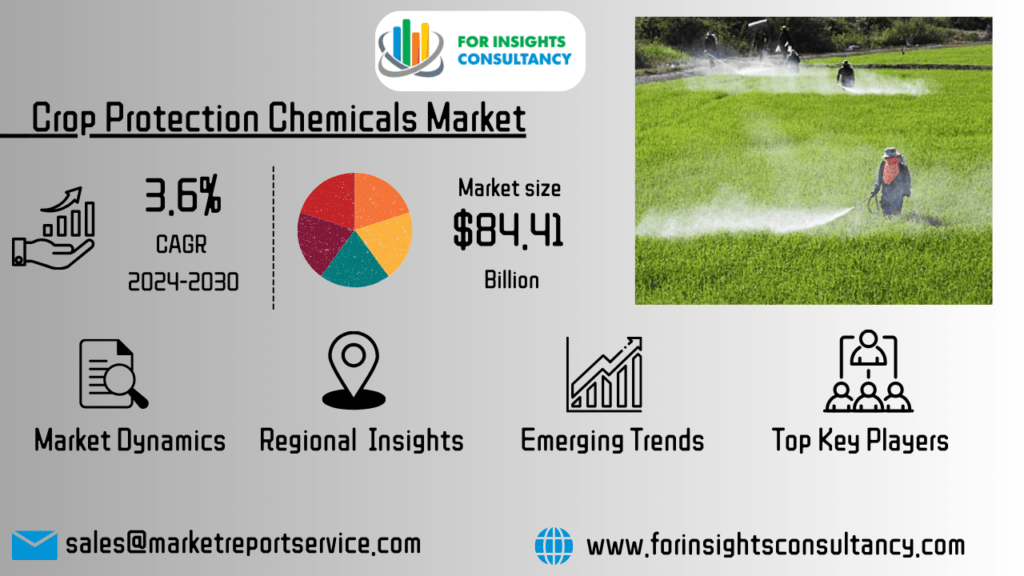
Crop Protection Chemicals Market Insights
· Market Size (2026): USD 70 Billion
· Forecast (2030): USD 84.41 Billion
· CAGR (2026–2030): 3.6%
· Base Year: 2025
· Key Segments: Product Type: Herbicides, Insecticides, Fungicides, Biologicals
· Top Regions: Leading Region: Latin America, High-Growth Region: Asia-Pacific, Mature Markets: North America & Europe
Crop Protection Chemicals Market Executive Summary
Global Crop Protection Chemicals Market are expected to show huge growth over the forecast period due to growing global food demand, mounting pressure on world‘s agricultural productivity and declining post-harvest crop loss through pests, disease and weeds as rate of crop production worldwide is becoming increasingly inadequate to satisfy growing human population. Growing demand for high yield agricultural production system and emergence of precision and sustainable agriculture farming systems are important factors for the developing market.
Profit pools around traditional crop protection products are also being hit by the shelf to farm penetration of emerging categories like tech/ bio crop protection solutions, premiumisation of high end agro chemicals and digital farming. Increasing regulatory clout for safer, environment friendly products is also leading to proliferation of bio based and low toxicity formulations.
Large companies are being concentrating on product innovations, research and development investments and strategic agreements to be able to diversify product offerings and geographical presence. Large companies are also focusing on data oriented agriculture, A. I based crop surveillance and integrated pest management (IPM).
To sum up, the market is well equipped to grow up at a moderate rate in the coming years, due to the technological development, the changing legislation/law and the growing penetration of “green-farming”.
Crop Protection Chemicals Market Overview (2026)
Crop Protection Chemicals Market is the broad term used to define different kinds of chemicals and biologicals used for protecting crops against damaging influences exerted by insects, weeds, fungi etc. used for the protection of crops. They comprise all the chemicals including the Herbicides, Insecticides, Fungicides and all Biologicals. Care of crops has important influence on increase in crop productivity, quality of the crop and ultimately food security.
Developments in the market over the past ten years and the momentum towards sustainable farming, increased adoption of biological crop protection and advances in precision farming technology has fueled the industry. Technological innovations such as pixel-by-pixel crop monitoring, sensor guided variable spraying etc have increased productivity.
The choices made by consumer groups seeking for healthier and more sustainable foods, combined with the development of technology, regulations and standards are impacting the structure of the market. Governments and industries worldwide are encouraging the use of eco-sustainable, low toxicity products, encouraging manufacturers to increase its portfolio.
Crop Protection Chemicals Market Dynamics 2026
Growth Driver
Rising Demand for Global Food Security & High-Yield Agriculture
As the world‘s population is predicted to exceed 8.5 billion by 2030, pressure is being placed on agriculture to further increase yields from crops. Crops are being protected using agrochemicals against pests and diseases (which could potentially be as high as 20 40 % losses without control).
In addition, the decline in the amount of arable land and climate change are also leading to a higher consumption of herbicides, insecticides and fungicides needed to efficiently counter pests and diseases. This is especially valid for developing countries, since they have an overall higher consumption of food, which however is also forecasted to increase.
Growth in Sustainable & Precision Agriculture (Industry Trend)
The crop protection chemicals industry is currently being redefined through the ongoing development of precision farming equipment and the development of the more sustainable farming practices. Increasing numbers of farmers will be using AI crop observation, drones and intelligent spray equipment for the application of chemicals.
Alongside this the larger category of biotech based crop protection products, biopesticides, are experiencing significant growth as governments and regulators look for greener options. Hence this is having an impact on product development strategies, with huge expenditure on low toxicity formulations and IPM.
Impact:
Better efficiency and selective use of chemicals.
Lowered environmental impact and regulatory risk
Growth in the Premium and bio-based product segments
Heavy R&D spends with major agrochemical firms
Restraints
High Cost
Premium chemicals & biologicals continue to be cost prohibitive thus keeping small scale farmers from using.
Regulatory Challenges
Product launches are delayed due to rigorous environmental regulation approval process.
Supply Chain Issues
Or they become too dependent on access to global raw materials and encounter supply and balance-of-payments problems as a result. Price fluctuations in global markets can therefore be very damaging.
Opportunities
Emerging Markets
Increased crop demand Asia-Pacific & Latin America due to land expansion Innovation
Rise in biologicals, environmentally friendly formulas and sophisticated crop solutions.
Digital Channels
Growth of agri-tech platforms, e-commerce and precision-farming tools
Key Trends
Premiumization
Movement toward high value, enriched, and/or more complex formulations due to higher efficiency and yields.
Sustainability Focus
Increased demand for environmentally sustainable, bio-based and low toxicity crop protection treatments.
Technological Innovation
The use of AI, precision agriculture and intelligent spraying were also emerging adopter of them.
Biologicals Expansion
Accelerated development of biopesticides and other natural crop protection products
Data-Driven Farming
Use of digital platforms, sensors, and analytics for optimized chemical use
Crop Protection Chemicals Market Top Companies Covered In this Report are
key companies in Crop Protection Chemicals market includes BASF, Syngenta, Bayer Crop Science, Corteva, PI Industries, Cheminova, Hansen, Nanjing red sun co. ltd, Kumiai Chemicals, Wynca Chemicals, Sampan Oxon etc. Companies are investing heavily in active ingredient production to enhance integration in product development and manufacturing stages of the chain.
Crop Protection Chemicals Market company news 2025 and 2026
BASF SE
· Planning IPO of its Agricultural Solutions division by 2027 to unlock value and focus on agri-business growth.
· Acquired AgBiTech (2026) to strengthen biological crop protection portfolio.
Syngenta Group
· Launching new herbicide (Virestina) in 2026 to combat resistant superweeds using AI-based molecule discovery
Bayer Crop Science
· Engaged in regulatory developments around dicamba herbicide approvals (US)
Corteva Agriscience
· Launched joint venture with Hexagon Bio (2025) to develop nature-based crop protection using AI & microbial science
· Reported 16% growth in crop protection volumes (2025) driven by strong demand in Latin America
Crop Protection Chemicals Market Segments
Crop Protection Chemicals Market by Type,
· Herbicides
· Insecticides
· Fungicides
· Bactericides
Crop Protection Chemicals Market by Origin,
· Synthetic
· Biopesticides
Crop Protection Chemicals Market by Form,
· Liquid
· Solid
Crop Protection Chemicals Market by Crop Type,
· Cereals and Grains
· Oilseeds and Pulses
· Other Crops
Crop Protection Chemicals Market by Application,
- Foliar Seed Treatment
- Soil Treatment
Crop Protection Chemicals Market Regional Insights
North America – Insight
Widespread adoption of precision agriculture and digital farming platforms is shifting the focus from volume demand to efficient use of chemicals. Regulatory crackdown (e.g., herbicides restrictions) and movement toward biologicals (particularly in the U. S., where farmers are trying to meet the dual demands of productivity and regulation/sustainability) are defining market trends.
Europe – Insight
Europe will continue to be a regulation dominated landscape and the tightening of policies across the sustainability steer frames will drive a speed of transition to low-toxicity and bio-based alternatives to crop protection solutions. Usage of conventional chemicals continues to decrease and innovation in area of IPM and green formulations is gaining ground.
Asia-Pacific – Growth Driver
The demand for food is increasing, growing population and the expansion of crop production in countries such as China and India is encouraging this. Awareness of crop yields and government encouragement of the use of modern agricultural inputs, both conventional and biological, is stimulating demand.
Rest of the World (Latin America, Middle East & Africa) Emerging Trends
Latin America is the most prominent region for large-scale commercial farming and thus high demand for herbicides and insecticides from this part of the world is expected in the foreseeable future especially from Brazil and Argentina. The Middle East & Africa, is a growing market, albeit at a slow pace for the time-being, induced by the modernisation of agriculture, irrigation projects and the use of affordable crop protection agents.
Analyst Insights
Expert Opinion:
However, analysts watch for the premium and sustainable crop protection products to lead demand for when it comes to the forefront of the market, ultimately as farmers favour efficiency and higher yield over cheap chemicals and compliance with all regulations.
Market will experience a significant transition into biologicals and low toxic formulations, due to increasing global regulatory pressures and heightened consumer concern about food safety; at the same time, new precision crop production technologies, such as AI-based crop monitoring and intelligent crop spraying, will transform the application of crop protection chemicals.
From a competitive angle, major players are starting to go beyond mere chemicals and investing in holistic solutions with the combination of chemical, seed and digital solutions. This move will translate into high-margin opportunities in premium geographies, especially in developed economies, as volume still grows in emerging economies.
Crop Protection Chemicals Market Research Methodology
Primary Research:
Close communication with people working or dealing with industry (such as manufacturing companies, traders, agronomists, agricultural agents) obtaining information through interviews, questionnaires, and discussions. For example, market trends, demand, prices, competition conditions are obtained.
Secondary Research:
Examining company reports, investor presentations, regulatory documents, trade magazines and industry data sources. Also evaluatinng data from the main agrochemical firms, the national agriculture agencies and international bodies. To establish a sounds market foundation.
Data Validation:
Triangulation is used for validating all data collected by getting corroboration and confirmations of primary finding with secondary sources. Quantitative and qualitative data is validated by industry experts to ensure accuracy and reliability in the report.
Crop Protection Chemicals Market – Data Sources
Proprietary Research (For Insights Consultancy):
Broader validation and learning are then produced by way of internal databases, experienced interviews and specialist analysis by For Insights Consultancy, providing accurate, trustworthy, current market intelligence to meet client needs.
Frequently asked questions with answers
What is the Crop Protection Chemicals market size?
The global Crop Protection Chemicals market is estimated at around USD 70 billion in 2026, based on aggregated revenues and business segments reported by leading agrochemical companies and industry disclosures.
What is the CAGR of the Crop Protection Chemicals market?
The Crop Protection Chemicals market is expected to grow at a CAGR of approximately 3.6% over the next few years, reflecting steady demand driven by agricultural productivity needs and gradual transition toward sustainable solutions.
What are the key trends in the Crop Protection Chemicals market?
The Crop Protection Chemicals market is driven by a shift toward sustainable and bio-based solutions, increasing adoption of precision agriculture technologies, and growing demand for high-efficiency, premium crop protection products.
Which regions dominate the crop protection chemicals market?
Latin America and Asia-Pacific are key growth regions, while North America and Europe are mature markets with advanced farming practices.
Who are the key companies in the crop protection chemicals market?
Leading players include BASF SE, Syngenta Group, Bayer Crop Science, Corteva Agriscience, PI Industries, FMC Corporation, Chr. Hansen, Nanjing Red Sun Co., Ltd., Kumiai Chemical Industry, and Zhejiang Wynca Chemical Group.
Customization: We Can Provide Following Things
1) On Market More Company Profiles (Competitors)
2) Data About Particular Country Or Region
3) We Will Incorporate The Same With No Additional Cost (Post Conducting Feasibility).
Any Requirement Contact Us: https://www.forinsightsconsultancy.com/contact-us
Related Market Reports
Crop Protection Chemicals Market Report
Covers market size, trends, segmentation (herbicides, insecticides, fungicides), and regional outlook (2024–2030).
Focus on agrochemicals and industrial chemical applications impacting crop protection value chains.
Insights into formulation technologies and regulatory trends relevant to chemical innovation
Table of Content
Chapter 1 Methodology & Scope
1.1 Industry coverage
1.2 Market scope & definition
1.3 Base estimates & calculations
1.3.1 Data collection
1.4 Forecast parameters
1.5 COVID-19 impact analysis at global level
1.6 Data validation
1.7 Data Sources
1.7.1 Primary
1.7.2 Secondary
1.7.2.1 Paid sources
1.7.2.2 Unpaid sources
Chapter 2 Executive Summary
2.1 Crop protection chemicals industry 3600 synopsis, 2023 – 2030
2.2 Business trends
2.3 Product trends
2.4 Source trends
2.5 Crop type trends
2.6 Form trends
2.7 Application trends
2.8 Regional trends
Chapter 3 Crop protection chemicals Industry Insights
3.1 Industry ecosystem analysis
3.2 Industry impact forces
3.2.1 Growth drivers
3.2.2 Industry pitfalls & challenges
3.3 Growth potential analysis
3.3.1 By product
3.3.2 By source
3.3.3 By crop type
3.3.4 By form
3.3.5 By application
3.4 COVID- 19 impact analysis
3.5 Regulatory landscape
3.5.1 U.S.
3.5.2 Europe
3.6 Pricing analysis, 2022
3.7 Reimbursement scenario
3.8 Technology landscape
3.9 Future market trends
3.10 GAP analysis
3.11 Porter’s analysis
3.12 PESTEL analysis
3.13 Impact of Russia Ukraine war
Chapter 4 Competitive Landscape, 2022
4.1 Introduction
4.2 Company matrix analysis, 2022
4.3 Global company market share analysis, 2022
4.4 Competitive positioning matrix
4.5 Strategy dashboard
Chapter 5 Crop protection chemicals Market Size and Forecast, By Product 2023 – 2030
5.1 Herbicides
5.2 Fungicides
5.3 Insecticides
5.4 Biopesticides
5.5 Others
Chapter 6 Crop protection chemicals Market Size and Forecast, By Source 2023 – 2030
6.1 Synthetic
6.2 Natural
Chapter 7 Crop protection chemicals Market Size and Forecast, By Crop Type 2023 – 2030
7.1 Cereal and Grains
7.2 Fruits and Vegetables
7.3 Oilseed and Pulses
7.4 Others
Chapter 8 Crop protection chemicals Market Size and Forecast, By Form 2023 – 2030
8.1 Dry
8.2 Liquid
Chapter 9 Crop protection chemicals Market Size and Forecast, By Application 2023 – 2030
9.1 Foliar Spray
9.2 Seed Treatment
9.3 Soil Treatment
9.4 Others
Chapter 10 Crop protection chemicals Market Size and Forecast, By Region 2023 – 2030
10.1 Key trends, by region
10.2 North America
10.2.1 U.S.
10.2.2 Canada
10.3 Europe
10.3.1 Germany
10.3.2 UK
10.3.3 France
10.3.4 Spain
10.3.5 Italy
10.4 Asia Pacific
10.4.1 Japan
10.4.2 China
10.4.3 India
10.4.4 Australia
10.4.5 South Korea
10.4.6 Indonesia
10.4.7 Malaysia
10.5 Latin America
10.5.1 Brazil
10.5.2 Mexico
10.5.3 Argentina
10.6 MEA
10.6.1 South Africa
10.6.2 Saudi Arabia
10.6.3 UAE
10.6.4 Egypt
Chapter 11 Company Profiles
11.1 BASF
11.2 Syngenta
11.3 Bayer Crop Science
11.4 Corteva
11.5 PI Industries
11.6 Cheminova
11.7 Hansen
11.8 Nanjing Red Sun Co. Ltd
11.9 Kumiai Chemicals
11.10 Wynca Chemicals
11.11 Sampan Oxon
Data Tables
TABLE 1. Product mapping
TABLE 2. Market revenue, by product (2022)
TABLE 3. Marker revenue, by source (2022)
TABLE 4. Market revenue, by crop type (2022)
TABLE 5. Market revenue, by application (2022)
TABLE 6. Market revenue, by form (2022)
TABLE 7. Market revenue, by region (2022)
TABLE 8. Global market size, 2023 – 2030,
TABLE 9. Global Crop protection chemicals Market size, 2023 – 2030,
TABLE 10. Global Crop protection chemicals Market size, by region, 2023-2030
TABLE 11. Global Crop protection chemicals Market size, by region, 2023-2030
TABLE 12. Global market size, by product, 2023-2030
TABLE 13. Global market size, by product, 2023-2030
TABLE 14. Global market size, by source, 2023-2030
TABLE 15. Global market size, by source, 2023-2030
TABLE 16. Global market size, by crop type, 2023-2030
TABLE 17. Global market size, by crop type, 2023-2030
TABLE 18. Global market size, by application, 2023-2030
TABLE 19. Global market size, by application, 2023-2030
TABLE 20. Global market size, by form, 2023-2030
TABLE 21. Global market size, by form, 2023-2030
TABLE 22. Industry impact forces
TABLE 23. North America Crop protection chemicals Market size, by country, 2023-2030
TABLE 24. North America market size, by country, 2023-2030
TABLE 25. North America market size, by product, 2023-2030
TABLE 26. North America market size, by product, 2023-2030
TABLE 27. North America market size, by application, 2023-2030
TABLE 28. North America market size, by application, 2023-2030
TABLE 29. North America market size, by crop type, 2023-2030
TABLE 30. North America market size, by crop type, 2023-2030
TABLE 31. North America market size, by source, 2023-2030
TABLE 32. North America market size, by source, 2023-2030
TABLE 33. North America market size, by form, 2023-2030
TABLE 34. North America market size, by form, 2023-2030
TABLE 35. U.S. Crop protection chemicals Market size, by product, 2023-2030
TABLE 36. U.S. market size, by product, 2023-2030
TABLE 37. U.S. market size, by application, 2023-2030
TABLE 38. U.S. market size, by application, 2023-2030
TABLE 39. U.S. market size, by crop type, 2023-2030
TABLE 40. U.S. market size, by crop type, 2023-2030
TABLE 41. U.S. market size, by source, 2023-2030
TABLE 42. U.S. market size, by source, 2023-2030
TABLE 43. U.S. market size, by form, 2023-2030
TABLE 44. U.S. market size, by form, 2023-2030
TABLE 45. Canada Crop protection chemicals Market size, by product, 2023-2030
TABLE 46. Canada market size, by product, 2023-2030
TABLE 47. Canada market size, by application, 2023-2030
TABLE 48. Canada market size, by application, 2023-2030
TABLE 49. Canada market size, by crop type, 2023-2030
TABLE 50. Canada market size, by crop type, 2023-2030
TABLE 51. Canada market size, by source, 2023-2030
TABLE 52. Canada market size, by source, 2023-2030
TABLE 53. Canada market size, by form, 2023-2030
TABLE 54. Canada market size, by form, 2023-2030
TABLE 55. Europe Crop protection chemicals Market size, by country, 2023-2030
TABLE 56. Europe market size, by country, 2023-2030
TABLE 57. Europe market size, by country, 2023-2030
TABLE 58. Europe market size, by country, 2023-2030
TABLE 59. Europe market size, by product, 2023-2030
TABLE 60. Europe market size, by product, 2023-2030
TABLE 61. Europe market size, by application, 2023-2030
TABLE 62. Europe market size, by application, 2023-2030
TABLE 63. Europe market size, by crop type, 2023-2030
TABLE 64. Europe market size, by crop type, 2023-2030
TABLE 65. Europe market size, by source, 2023-2030
TABLE 66. Europe market size, by source, 2023-2030
TABLE 67. Europe market size, by form, 2023-2030
TABLE 68. Europe market size, by form, 2023-2030
TABLE 69. Germany Crop protection chemicals Market size, by product, 2023-2030
TABLE 70. Germany market size, by product, 2023-2030
TABLE 71. Germany market size, by application, 2023-2030
TABLE 72. Germany market size, by application, 2023-2030
TABLE 73. Germany market size, by crop type, 2023-2030
TABLE 74. Germany market size, by crop type, 2023-2030
TABLE 75. Germany market size, by source, 2023-2030
TABLE 76. Germany market size, by source, 2023-2030
TABLE 77. Germany market size, by form, 2023-2030
TABLE 78. Germany market size, by form, 2023-2030
TABLE 79. UK Crop protection chemicals Market size, by product, 2023-2030
TABLE 80. UK market size, by product, 2023-2030
TABLE 81. UK market size, by application, 2023-2030
TABLE 82. UK market size, by application, 2023-2030
TABLE 83. UK market size, by crop type, 2023-2030
TABLE 84. UK market size, by crop type, 2023-2030
TABLE 85. UK market size, by source, 2023-2030
TABLE 86. UK market size, by source, 2023-2030
TABLE 87. UK market size, by form, 2023-2030
TABLE 88. UK market size, by form, 2023-2030
TABLE 89. France Crop protection chemicals Market size, by product, 2023-2030
TABLE 90. France market size, by product, 2023-2030
TABLE 91. France market size, by application, 2023-2030
TABLE 92. France market size, by application, 2023-2030
TABLE 93. France market size, by crop type, 2023-2030
TABLE 94. France market size, by crop type, 2023-2030
TABLE 95. France market size, by source, 2023-2030
TABLE 96. France market size, by source, 2023-2030
TABLE 97. France market size, by form, 2023-2030
TABLE 98. France market size, by form, 2023-2030
TABLE 99. Spain Crop protection chemicals Market size, by product, 2023-2030
TABLE 100. Spain market size, by product, 2023-2030
TABLE 101. Spain market size, by application, 2023-2030
TABLE 102. Spain market size, by application, 2023-2030
TABLE 103. Spain market size, by crop type, 2023-2030
TABLE 104. Spain market size, by crop type, 2023-2030
TABLE 105. Spain market size, by source, 2023-2030
TABLE 106. Spain market size, by source, 2023-2030
TABLE 107. Spain market size, by form, 2023-2030
TABLE 108. Spain market size, by form, 2023-2030
TABLE 109. Italy Crop protection chemicals Market size, by product, 2023-2030
TABLE 110. Italy market size, by product, 2023-2030
TABLE 111. Italy market size, by application, 2023-2030
TABLE 112. Italy market size, by application, 2023-2030
TABLE 113. Italy market size, by crop type, 2023-2030
TABLE 114. Italy market size, by crop type, 2023-2030
TABLE 115. Italy market size, by source, 2023-2030
TABLE 116. Italy market size, by source, 2023-2030
TABLE 117. Italy market size, by form, 2023-2030
TABLE 118. Italy market size, by form, 2023-2030
TABLE 119. Asia Pacific Crop protection chemicals Market size, by country, 2023-2030
TABLE 120. Asia Pacific market size, by country, 2023-2030
TABLE 121. Asia Pacific market size, by product, 2023-2030
TABLE 122. Asia Pacific market size, by product, 2023-2030
TABLE 123. Asia Pacific market size, by application, 2023-2030
TABLE 124. Asia Pacific market size, by application, 2023-2030
TABLE 125. Asia Pacific market size, by crop type, 2023-2030
TABLE 126. Asia Pacific market size, by crop type, 2023-2030
TABLE 127. Asia Pacific market size, by source, 2023-2030
TABLE 128. Asia Pacific market size, by source, 2023-2030
TABLE 129. Asia Pacific market size, by form, 2023-2030
TABLE 130. Asia Pacific market size, by form, 2023-2030
TABLE 131. China Crop protection chemicals Market size, by product, 2023-2030
TABLE 132. China market size, by product, 2023-2030
TABLE 133. China market size, by application, 2023-2030
TABLE 134. China market size, by application, 2023-2030
TABLE 135. China market size, by crop type, 2023-2030
TABLE 136. China market size, by crop type, 2023-2030
TABLE 137. China market size, by source, 2023-2030
TABLE 138. China market size, by source, 2023-2030
TABLE 139. China market size, by form, 2023-2030
TABLE 140. China market size, by form, 2023-2030
TABLE 141. Japan Crop protection chemicals Market size, by product, 2023-2030
TABLE 142. Japan market size, by product, 2023-2030
TABLE 143. Japan market size, by application, 2023-2030
TABLE 144. Japan market size, by application, 2023-2030
TABLE 145. Japan market size, by crop type, 2023-2030
TABLE 146. Japan market size, by crop type, 2023-2030
TABLE 147. Japan market size, by source, 2023-2030
TABLE 148. Japan market size, by source, 2023-2030
TABLE 149. Japan market size, by form, 2023-2030
TABLE 150. Japan market size, by form, 2023-2030
TABLE 151. India Crop protection chemicals Market size, by product, 2023-2030
TABLE 152. India market size, by product, 2023-2030
TABLE 153. India market size, by application, 2023-2030
TABLE 154. India market size, by application, 2023-2030
TABLE 155. India market size, by crop type, 2023-2030
TABLE 156. India market size, by crop type, 2023-2030
TABLE 157. India market size, by source, 2023-2030
TABLE 158. India market size, by source, 2023-2030
TABLE 159. India market size, by form, 2023-2030
TABLE 160. India market size, by form, 2023-2030
TABLE 161. Australia Crop protection chemicals Market size, by product, 2023-2030
TABLE 162. Australia market size, by product, 2023-2030
TABLE 163. Australia market size, by application, 2023-2030
TABLE 164. Australia market size, by application, 2023-2030
TABLE 165. Australia market size, by crop type, 2023-2030
TABLE 166. Australia market size, by crop type, 2023-2030
TABLE 167. Australia market size, by source, 2023-2030
TABLE 168. Australia market size, by source, 2023-2030
TABLE 169. Australia market size, by form, 2023-2030
TABLE 170. Australia market size, by form, 2023-2030
TABLE 171. South Korea Crop protection chemicals Market size, by product, 2023-2030
TABLE 172. South Korea market size, by product, 2023-2030
TABLE 173. South Korea market size, by application, 2023-2030
TABLE 174. South Korea market size, by application, 2023-2030
TABLE 175. South Korea market size, by crop type, 2023-2030
TABLE 176. South Korea market size, by crop type, 2023-2030
TABLE 177. South Korea market size, by source, 2023-2030
TABLE 178. South Korea market size, by source, 2023-2030
TABLE 179. South Korea market size, by form, 2023-2030
TABLE 180. South Korea market size, by form, 2023-2030
TABLE 181. Indonesia Crop protection chemicals Market size, by product, 2023-2030
TABLE 182. Indonesia market size, by product, 2023-2030
TABLE 183. Indonesia market size, by application, 2023-2030
TABLE 184. Indonesia market size, by application, 2023-2030
TABLE 185. Indonesia market size, by crop type, 2023-2030
TABLE 186. Indonesia market size, by crop type, 2023-2030
TABLE 187. Indonesia market size, by source, 2023-2030
TABLE 188. Indonesia market size, by source, 2023-2030
TABLE 189. Indonesia market size, by form, 2023-2030
TABLE 190. Indonesia market size, by form, 2023-2030
TABLE 191. Malaysia Crop protection chemicals Market size, by product, 2023-2030
TABLE 192. Malaysia market size, by product, 2023-2030
TABLE 193. Malaysia market size, by application, 2023-2030
TABLE 194. Malaysia market size, by application, 2023-2030
TABLE 195. Malaysia market size, by crop type, 2023-2030
TABLE 196. Malaysia market size, by crop type, 2023-2030
TABLE 197. Malaysia market size, by source, 2023-2030
TABLE 198. Malaysia market size, by source, 2023-2030
TABLE 199. Malaysia market size, by form, 2023-2030
TABLE 200. Malaysia market size, by form, 2023-2030
TABLE 201. Latin America Crop protection chemicals Market size, by country, 2023-2030
TABLE 202. Latin America market size, by country, 2023-2030
TABLE 203. Latin America market size, by product, 2023-2030
TABLE 204. Latin America market size, by product, 2023-2030
TABLE 205. Latin America market size, by application, 2023-2030
TABLE 206. Latin America market size, by application, 2023-2030
TABLE 207. Latin America market size, by crop type, 2023-2030
TABLE 208. Latin America market size, by crop type, 2023-2030
TABLE 209. Latin America market size, by source, 2023-2030
TABLE 210. Latin America market size, by source, 2023-2030
TABLE 211. Latin America market size, by form, 2023-2030
TABLE 212. Latin America market size, by form, 2023-2030
TABLE 213. Brazil Crop protection chemicals Market size, by product, 2023-2030
TABLE 214. Brazil market size, by product, 2023-2030
TABLE 215. Brazil market size, by application, 2023-2030
TABLE 216. Brazil market size, by application, 2023-2030
TABLE 217. Brazil market size, by crop type, 2023-2030
TABLE 218. Brazil market size, by crop type, 2023-2030
TABLE 219. Brazil market size, by source, 2023-2030
TABLE 220. Brazil market size, by source, 2023-2030
TABLE 221. Brazil market size, by form, 2023-2030
TABLE 222. Brazil market size, by form, 2023-2030
TABLE 223. Mexico Crop protection chemicals Market size, by product, 2023-2030
TABLE 224. Mexico market size, by product, 2023-2030
TABLE 225. Mexico market size, by application, 2023-2030
TABLE 226. Mexico market size, by application, 2023-2030
TABLE 227. Mexico market size, by crop type, 2023-2030
TABLE 228. Mexico market size, by crop type, 2023-2030
TABLE 229. Mexico market size, by source, 2023-2030
TABLE 230. Mexico market size, by source, 2023-2030
TABLE 231. Mexico market size, by form, 2023-2030
TABLE 232. Mexico market size, by form, 2023-2030
TABLE 233. Argentina Crop protection chemicals Market size, by product, 2023-2030
TABLE 234. Argentina market size, by product, 2023-2030
TABLE 235. Argentina market size, by application, 2023-2030
TABLE 236. Argentina market size, by application, 2023-2030
TABLE 237. Argentina market size, by crop type, 2023-2030
TABLE 238. Argentina market size, by crop type, 2023-2030
TABLE 239. Argentina market size, by source, 2023-2030
TABLE 240. Argentina market size, by source, 2023-2030
TABLE 241. Argentina market size, by form, 2023-2030
TABLE 242. Argentina market size, by form, 2023-2030
TABLE 243. MEA Crop protection chemicals Market size, by country, 2023-2030
TABLE 244. MEA market size, by country, 2023-2030
TABLE 245. MEA market size, by product, 2023-2030
TABLE 246. MEA market size, by product, 2023-2030
TABLE 247. MEA market size, by application, 2023-2030
TABLE 248. MEA market size, by application, 2023-2030
TABLE 249. MEA market size, by crop type, 2023-2030
TABLE 250. MEA market size, by crop type, 2023-2030
TABLE 251. MEA market size, by source, 2023-2030
TABLE 252. MEA market size, by source, 2023-2030
TABLE 253. MEA market size, by form, 2023-2030
TABLE 254. MEA market size, by form, 2023-2030
TABLE 255. South Africa Crop protection chemicals Market size, by product, 2023-2030
TABLE 256. South Africa market size, by product, 2023-2030
TABLE 257. South Africa market size, by application, 2023-2030
TABLE 258. South Africa market size, by application, 2023-2030
TABLE 259. South Africa market size, by crop type, 2023-2030
TABLE 260. South Africa market size, by crop type, 2023-2030
TABLE 261. South Africa market size, by source, 2023-2030
TABLE 262. South Africa market size, by source, 2023-2030
TABLE 263. South Africa market size, by form, 2023-2030
TABLE 264. South Africa market size, by form, 2023-2030
TABLE 265. Saudi Arabia Crop protection chemicals Market size, by product, 2023-2030
TABLE 266. Saudi Arabia market size, by product, 2023-2030
TABLE 267. Saudi Arabia market size, by application, 2023-2030
TABLE 268. Saudi Arabia market size, by application, 2023-2030
TABLE 269. Saudi Arabia market size, by crop type, 2023-2030
TABLE 270. Saudi Arabia market size, by crop type, 2023-2030
TABLE 271. Saudi Arabia market size, by source, 2023-2030
TABLE 272. Saudi Arabia market size, by source, 2023-2030
TABLE 273. Saudi Arabia market size, by form, 2023-2030
TABLE 274. Saudi Arabia market size, by form, 2023-2030
TABLE 275. UAE Crop protection chemicals Market size, by product, 2023-2030
TABLE 276. UAE market size, by product, 2023-2030
TABLE 277. UAE market size, by application, 2023-2030
TABLE 278. UAE market size, by application, 2023-2030
TABLE 279. UAE market size, by crop type, 2023-2030
TABLE 280. UAE market size, by crop type, 2023-2030
TABLE 281. UAE market size, by source, 2023-2030
TABLE 282. UAE market size, by source, 2023-2030
TABLE 283. UAE market size, by form, 2023-2030
TABLE 284. UAE market size, by form, 2023-2030
TABLE 285. Egypt Crop protection chemicals Market size, by product, 2023-2030
TABLE 286. Egypt market size, by product, 2023-2030
TABLE 287. Egypt market size, by application, 2023-2030
TABLE 288. Egypt market size, by application, 2023-2030
TABLE 289. Egypt market size, by crop type, 2023-2030
TABLE 290. Egypt market size, by crop type, 2023-2030
TABLE 291. Egypt market size, by source, 2023-2030
TABLE 292. Egypt market size, by source, 2023-2030
TABLE 293. Egypt market size, by form, 2023-2030
TABLE 294. Egypt market size, by form, 2023-2030
Charts & Figures
FIG. 1 Industry segmentation
FIG. 2 Market estimation and forecast methodology
FIG. 3 Breakdown of primary participants
FIG. 4 Crop protection chemicals industry, 3600 synopses, 2023 – 2030
FIG. 5 Industry landscape, 2023-2030
FIG. 6 Growth potential analysis
FIG. 7 Porter’s analysis
FIG. 8 PESTEL analysis
FIG. 9 Company matrix analysis, 2022
FIG. 10 Strategy dashboard, 2022
Select PDF License
Single User: $3499
Multiple Users: $4499
Corporate Users: $5499
Pages: 120 | Dec-2023 Formats | PDF | Category: Chemical and Material | Delivery: 24 to 72 Hours