
Potato Processing Market Growth Analysis Research Report by Product Type (Frozen Potato Products, Potato Chips & Snacks, Dehydrated Potato Products, Potato Flour & Starch, Others), By Processing Type (Peeling, Cutting, Blanching, Drying, Frying, Freezing, Seasoning), By Application (Food Processing Industry, Quick Service Restaurants (QSRs), Household, Snacks Manufacturing, Others), by Equipment Type - and Global Forecast to 2034
Jan-2026 Formats | PDF | Category: Food Beverages | Delivery: 24 to 72 Hours
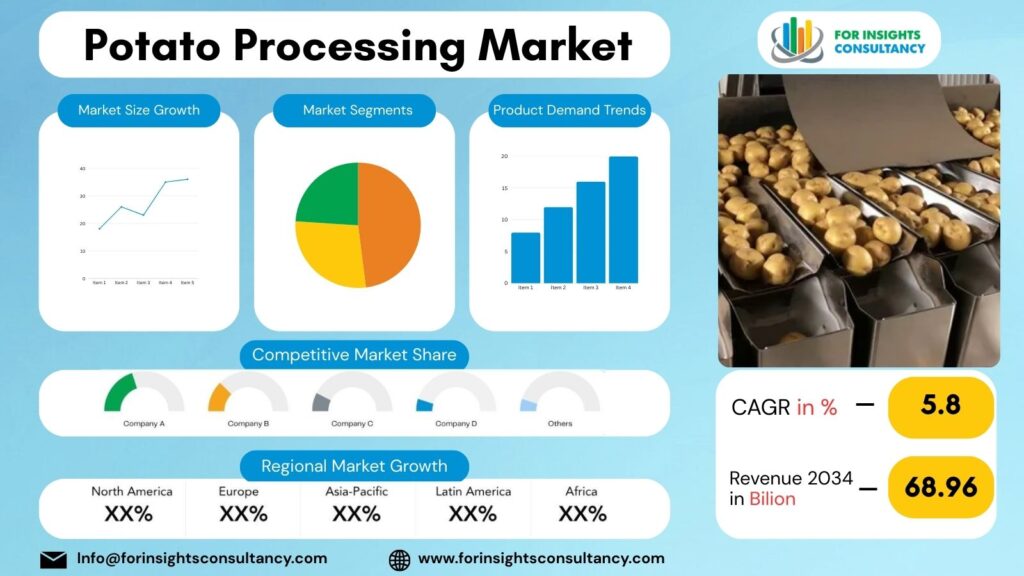
The Global Potato Processing Market is estimated to be valued at USD 43.8 Billion in 2025 and is expected to reach USD 68.96 Billion by 2034, growing at a compound annual growth rate (CAGR) of 5.8% from 2026 to 2034.
Potato Processing Market: Overview and Growth in the Upcoming Year
In 2026, the global market for potato processing is anticipated to expand steadily owing to increase in demand for convenient food products and ready-to-eat meals developing as well as developed economies. Rapid urbanization, hectic lifestyle of consumers and the surging demand for fast food and quick-service restaurants are to a greater extent driving the consumption of processed potato products like frozen fries, chips, flakes and dehydrated potatoes.
In 2026, advanced automation and modern processing technologies improve the processing efficiency and product quality of the food manufacturers. Food companies are utilizing new freezing, frying, and packaging technologies that safeguard taste and nutrition along with the shelf life. We have a growing number of consumers who are more aware of their health and the same time interested in healthy snacks. In response to this development, makers are introducing low-oil, baked and other clean-label potato products.
The development of organized retail and online grocery platforms is also aiding in market growth by making products more accessible. In Asia-Pacific, Middle East & Latin America, new growth opportunities will emerge due to rising disposable income and changing dietary habits. Sustainable initiatives aimed at cutting food waste and energy-efficient processing systems will be priorities for the manufacturers in 2026. As per industry observations, strategic partnerships, capacity expansion and investments in automated processing installation will intensify competitive dynamics during the entire year. More and more companies are strengthening their supply chains to handle the fluctuations of raw potato.
The potato processing market is anticipated to witness dynamic growth between 2020 and 2026 driven by the rise in consumption of convenience foods, technological advancement, changes in consumer preferences, increasing global distribution networks, and others. The market outlook remains encouraging due to the incessant innovations from manufacturers seeking to satisfy food consumption trends globally.
Market Dynamics
Growth Drivers
The potato processing market is anticipated to witness significant growth in 2026, fueled by shifts in food consumption and rising demand for convenient meal options. Rising popularity of ready to eat/cook food products among urban consumers whose lifestyles leave them with little time to prepare meals is one of the key growth drivers. The processed potato items like frozen fries, chips, snack products, etc., are gaining strong acceptance in households and foodservice outlets.
One major factor contributing to the growth of the market is the rapid proliferation of fast food outlets. Food establishments are often dependent on processed potatoes as they are consistent in quality, easy to prepare and have a good shelf life. The growing global network of food services in emerging economies will push up the demand for bulk potato processing in 2026. Also, advancement in potato processing equipment is aiding the market growth. Now a days Automation, more effective freezing and packaging solutions enable manufacturers to optimise productivity while ensuring quality and safety. Also, companies are focusing on energy-efficient, sustainable processing methods to save on operational costs and minimise output.
Consumer preference shifts toward innovative flavors and healthier snack options are encouraging manufacturers to diversify their product portfolios. Due to health awareness continuing to increase, there is more attention on the low-fat, baked, clean-label potato products.
The increasing organized retail, e-commerce grocery platforms and improvement in cold chain infrastructure is leading to high availability of processed potato products in regions. All these factors are expected to facilitate growth of the potato processing market during 2026 and onwards.
Industry Trends
The potato processing market is anticipated to witness substantial growth by 2030, according to the latest research paper – Global Potato Processing Market Report 2023. One of the main trends emerging in food processing has come in the demand for convenience food as consumers continue to look for quick meal options with little preparation time. Frozen potato products and ready-to-cook options are trending across retail and the foodservice sector.
Another important consumer trend impacting the market is the increased demand for healthier options. To keep up with the changing consumer trend towards health consciousness, the company is introducing baked, airfried and low-oil potato snacks. Products made with simpler formulas, which contain fewer additives, are gaining traction, especially in more premium products.
In 2026, production facilities are being transformed by automation and smart processing technologies. Food processors are enhancing their sorting, cutting, and freezing systems to boost efficiency, minimize waste and ensure product quality. Businesses have been utilizing digital monitoring and data-driven operations to optimize supply chains and manage raw material quality fluctuations.
Sustainability is becoming a key trend in the industry. To reduce impact on environment , companies are investing into energy-efficient equipment, water-saving processing systems, eco-friendly packaging. Simultaneously, minimizing food waste by better storage and processing is also getting attention.
Also, online grocery platforms are being expanded and distribution channels are ready to modern retail networks. Sales via direct-to-consumer and the development of private-label products are creating new competition opportunities for existing players and regional manufacturers.
Essentially, the potato processing market 2026 is driven by many factors, including innovation, convenience, digitization, sustainability, among others. These factors will promote steady growth in the long-run.
Restraints
The potato processing market shows some consistant growth potential. However, the overall growth of the potato processing market is expected to be limited due to some restraints by 2026. One of the primary challenges is the fluctuation in raw potato prices caused by changing weather conditions, crop yield variability, and supply chain disruptions. The limited availability of potatoes can impact production costs and profit margins of manufacturers since it’s an agricultural commodity.
Processing companies are mostly worried about rising energy and operational costs. The washing, frying, freezing and storing of potatoes consume much energy. Therefore, any increase in electricity/fuel prices affects the producers. Small and mid-sized processors often face profitability constraints due to cost pressures.
Increasing health consciousness among consumers for fried and high-calorie snack products is another restraint. As demand for convenience foods increases, health concerns related to obesity, sodium intake and the consumption of processed foods could limit growth in some product categories, particularly traditional fried potato snacks.
A close adherence to food safety regulations and quality compliance requirements in different countries can also be problematic. To comply with standards, manufacturers are compelled to spend on processing systems, certification and quality monitoring increasing their total production costs.
Supply chain inadequacies in some developing regions may limit market penetration. Refrigeration systems for frozen potato products, as well as their storage and transportation methods, are dependent on logistics systems.
Challenges
The potato processing market is projected to face various operational and industry-related hurdles that could impact growth momentum in 2026. Having a steady supply of good quality raw potato is one of the major problems. Climate variability, altered agricultural conditions, and diverse harvesting seasons impact quality and yield of raw materials, and this causes uncertainty and difficulties for processors.
The rising costs of production and logistics is another important challenge. Cleaning, cutting, frying, freezing and cold storage of food products require a lot of energy and upgraded facilities. The rise in fuel prices and transportation costs has added pressure on profit margins, particularly for manufacturers in low-cost markets.
Top Companies Covered In This Report
- The Kraft Heinz Company
- R. Simplot Company
- Idahoan Foods, LLC
- Lamb Weston Holdings, Inc.
- McCain Foods Limited
- Agristo NV
- Farm Frites International B.V.
- Aviko B.V.
- AGRANA Beteiligungs-AG
- Burts Potato Chips Ltd.
- Intersnack Group GmbH & Co. KG
- R. Short Milling Company
- The Little Potato Company Ltd.
- HyFun Foods
- Cavendish Farms
Potato Processing Industry News
Lamb Weston Holdings, Inc.
2024: The company announced restructuring measures, including closing an older processing facility and workforce optimization to improve operational efficiency and reduce costs.
2024–2025: Opened a new frozen potato production facility in the Netherlands to increase global production capacity.
2025–2026: Continued international expansion with investments in Argentina, highlighting confidence in long-term frozen potato demand.
McCain Foods Limited
2025: Released its global sustainability report showing progress in regenerative agriculture and energy efficiency initiatives, including increased renewable electricity usage and reduced emissions.
HyFun Foods
2025: Strengthened global export presence, supplying frozen potato products to more than 40 countries and becoming one of India’s leading exporters.
Detailed Segmentation and Classification of the report (Market Size and Forecast – 2034, Y-o-Y growth rate, and CAGR):
Segment By Product Type
- Frozen Potato Products
- Potato Chips & Snacks
- Dehydrated Potato Products
- Potato Flour & Starch
- Others
Segment by Processing Type
- Peeling
- Cutting
- Blanching
- Drying
- Frying
- Freezing
- Seasoning
Segment by Equipment Type
- Peeling Equipment
- Cutting & Slicing Equipment
- Washing Equipment
- Drying Equipment
- Frying Equipment
- Packaging Equipment
- Others
Segment by Application
- Food Processing Industry
- Quick Service Restaurants (QSRs)
- Household
- Snacks Manufacturing
- Others
Segment by Distribution Channel
- Business-to-Business (B2B)
- Business-to-Consumer (B2C)
- Retail Stores
- Online Channels
- Foodservice
Segment by End User
- Food Manufacturers
- Restaurants & Hotels
- Catering Services
- Retail Consumers
Regional Deep-dive Analysis:
The report provides in-depth qualitative and quantitative data on the Potato Processing Market for all of the regions and countries listed below:
North America
North America is expected to remain one of the leading regions in the global potato processing market, supported by strong consumer demand for convenience foods and a well-established food processing industry. The region benefits from advanced agricultural practices, high potato production volumes, and a mature cold chain infrastructure, enabling efficient large-scale processing and distribution of potato-based products.
The United States and Canada play a significant role in regional growth due to the widespread popularity of frozen potato products such as French fries, hash browns, and snack items. The strong presence of quick-service restaurants and fast-food chains continues to drive consistent demand for processed potato products, particularly in foodservice applications. In addition, busy consumer lifestyles and increasing preference for ready-to-cook meals are encouraging higher retail sales of frozen and packaged potato products.
Technological innovation is another key factor shaping the North American market. Processing companies are investing in automation, energy-efficient equipment, and advanced freezing technologies to improve production efficiency and maintain product quality. Manufacturers are also focusing on product diversification, introducing healthier options such as low-oil, baked, and clean-label potato snacks to align with evolving consumer preferences.
Sustainability initiatives are gaining importance across the region, with companies adopting responsible sourcing practices, reducing food waste, and improving energy management in processing facilities. Furthermore, strong retail networks, expanding e-commerce grocery platforms, and reliable logistics systems support widespread product availability across urban and rural areas.
Overall, North America’s potato processing market in 2026 is expected to demonstrate stable growth, driven by technological advancement, strong foodservice demand, innovation in product offerings, and a highly organized supply chain ecosystem.
Europe
In 2026, Europe is expected to remain a key region in the global potato processing market, supported by strong agricultural output and a well-established frozen food industry. Countries such as the Netherlands, Belgium, Germany, France, and the United Kingdom continue to play a major role in both production and exports of processed potato products. The region benefits from advanced farming techniques, high crop yields, and modern processing infrastructure.
Europe has a long-standing culture of consuming processed potato products, particularly frozen fries and snack items. The presence of large foodservice chains and quick-service restaurants contributes significantly to stable demand. In addition, retail consumption remains strong, with supermarkets and private-label brands offering a wide range of frozen and packaged potato products.
In 2026, sustainability is a major focus across the European potato processing industry. Companies are investing in energy-efficient manufacturing facilities, reducing water consumption, and adopting recyclable packaging solutions. Environmental regulations in the region are encouraging processors to improve operational efficiency and reduce carbon emissions.
Innovation in healthier product lines is also shaping the European market. Baked, air-fried, and reduced-salt potato snacks are gaining traction among health-conscious consumers. Clean-label ingredients and transparent sourcing practices are becoming important purchasing factors.
Overall, Europe’s potato processing market in 2026 is characterized by technological advancement, sustainability-driven initiatives, export strength, and evolving consumer preferences toward premium and healthier offerings.
Asia-Pacific
The Asia-Pacific region is anticipated to be one of the fastest-growing markets for potato processing in 2026. Rapid urbanization, rising disposable income, and expanding fast-food chains are significantly increasing demand for frozen and convenience potato products. Countries such as China, India, Japan, and Australia are contributing to regional market expansion.
In 2026, the growth of quick-service restaurants and Western-style food consumption continues to influence potato product demand across urban centers. Increasing penetration of modern retail stores and online grocery platforms is also improving product availability in developing economies.
Local processing capacity in Asia-Pacific is expanding as both domestic and international companies invest in new facilities. Improvements in cold chain infrastructure are helping ensure better storage and transportation of frozen potato products. At the same time, consumer awareness regarding food safety and quality standards is encouraging producers to upgrade processing technologies.
Health-conscious trends are gradually emerging in the region, leading to innovation in baked and lower-oil potato snack products. Sustainability and waste reduction practices are also gaining attention, particularly among larger manufacturers.
Overall, the Asia-Pacific potato processing market in 2026 is driven by urban lifestyle changes, retail expansion, foodservice growth, and increasing industrial investment, making it a high-potential region for future industry development.
Middle East and Africa
In 2026, the Middle East and Africa region is expected to witness gradual growth in the potato processing market, supported by changing food consumption habits and expanding urban populations. Increasing demand for convenient and ready-to-eat food products is encouraging the adoption of processed potato items such as frozen fries and snack products across major cities.
Countries in the Gulf Cooperation Council (GCC), including the United Arab Emirates and Saudi Arabia, are leading regional demand due to the strong presence of international quick-service restaurant chains and a growing hospitality sector. Rising tourism activities and expanding foodservice industries are further contributing to consistent consumption of processed potato products.
In Africa, market growth is supported by improving retail infrastructure and rising investments in local food processing capabilities. Governments and private players are focusing on strengthening agricultural value chains and reducing reliance on imported processed foods. However, cold chain limitations and logistics challenges remain key factors influencing market expansion in certain areas.
Manufacturers operating in the region are increasingly investing in modern storage, freezing technologies, and distribution networks to improve product availability and quality. Additionally, growing youth populations and increasing exposure to global food trends are supporting long-term demand growth.
Overall, the Middle East and Africa potato processing market in 2026 is characterized by expanding foodservice demand, urbanization, infrastructure development, and gradual modernization of food processing systems.
Frequently Asked Questions with Answers
What is the Potato Processing market size and growth forecast?
Potato Processing Market is projected to reach a value of USD 43.8 Billion in 2025 and is anticipated to grow to approximately USD 68.96 billion by 2034. This expansion reflects a compound annual growth rate (CAGR) of 5.8% during the forecast period from 2026 to 2034.
Who are the key players in the Potato Processing market?
The Potato Processing Market Includes Major Companies The Kraft Heinz Company, Lamb Weston Holdings, Inc., McCain Foods Limited, J.R. Simplot Company, Idahoan Foods, LLC, Agristo NV, Farm Frites International B.V., Aviko B.V., AGRANA Beteiligungs-AG, Burts Potato Chips Ltd., Intersnack Group GmbH & Co. KG, J.R. Short Milling Company, The Little Potato Company Ltd., HyFun Foods, Cavendish Farms Others.
What are the current and future trends for Potato Processing market?
Rising demand for convenience and frozen potato products, increasing automation and AI-based processing, expansion of QSR chains, and growing focus on healthier, sustainable production and packaging are shaping the current and future trends of the Potato Processing market.
Which regions dominate the Potato Processing market?
Europe and North America dominate the Potato Processing market due to strong processing industries, high frozen potato consumption, and established foodservice demand.
Key insights provided by the report that could help you take critical strategic decisions?
- Regional reports analyse product/service consumption and market factors in each region.
- Reports highlight possibilities and dangers for suppliers in the Potato Processing Market business globally.
- The report identifies regions and sectors with the highest growth potential.
- It provides a competitive market ranking of major companies, as well as information on new product launches, partnerships, business expansions, and acquisitions.
- The report includes a comprehensive corporate profile with company overviews, insights, product benchmarks, and SWOT analysis for key market participants.
Customization: We can provide following things
1) On request more company profiles (competitors)
2) Data about particular country or region
3) We will incorporate the same with no additional cost (Post conducting feasibility).
Any Requirement Contact us: https://www.forinsightsconsultancy.com/contact-us/
Table of Contents
For TOC Contact us: https://forinsightsconsultancy.com/contact-us/